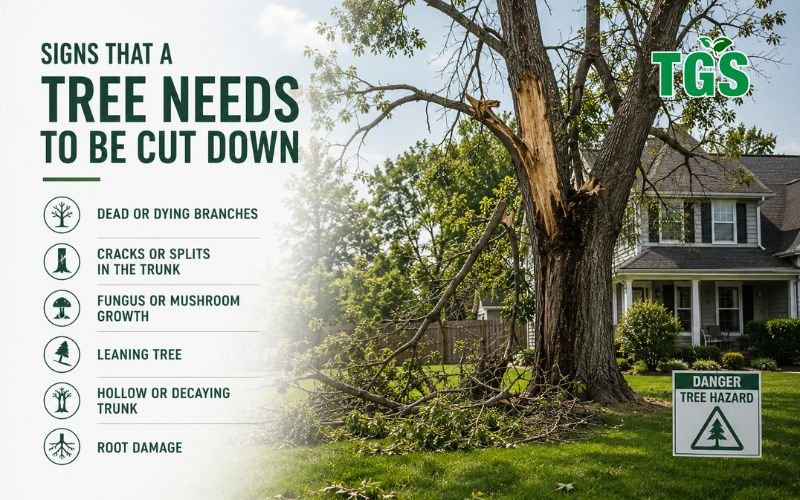
You look at a tall tree near your house and see bare branches. People usually want to leave nature alone and save money. Delaying action seems like the easiest option for busy homeowners. Soon, a sick plant becomes a huge danger to your home. This explains why you must learn the warning signs of dead wood today.
Why Ignoring a Bad Tree Can Cost You Thousands?
People ignore sick trees to save money, but this choice costs more later. A weak trunk falls on your house and crushes your car. Then, you pay high bills for roof and fence repairs. Insurance companies deny claims when homeowners ignore obvious rot. Because of this, you protect your bank account when you act fast.
The Most Clear Signs if Tree Is Dead or Dying
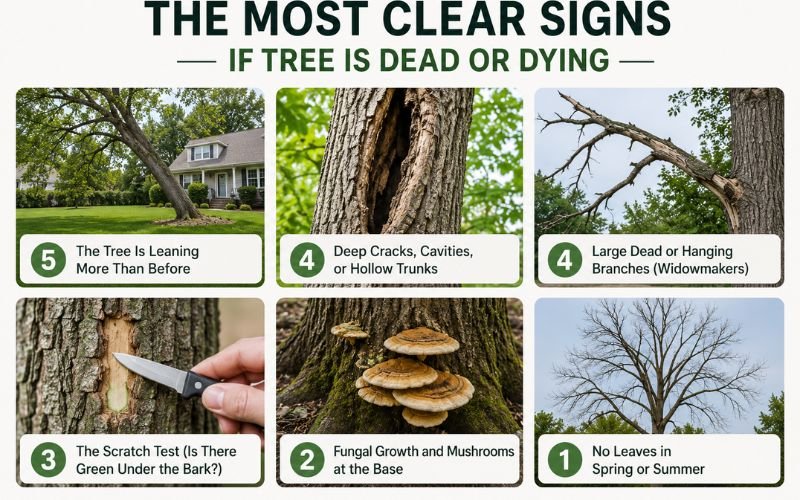
You must look for clear clues to save your property. Total decay stands out as one of the clear signs that a tree needs to be cut down. Over time, a dead plant drops heavy branches on people.
1. No Leaves in Spring or Summer
Healthy trees grow green leaves every spring. Bare branches in June mean the plant lacks life. Next, the wood turns dry, and the limbs become brittle. You need to call an expert before things get worse.
2. Fungal Growth and Mushrooms at the Base
Mushrooms grow on dead wood. Fungi near the roots show internal rot because of these mushrooms. The trunk develops rot on the inside out; the plant will become weak.
3. The Scratch Test (Is There Green Under the Bark?)
Homeowners can test the plant’s health with a small scratch. First, pick a small twig. Then, scrape the outer bark with your fingernail. Green tissue means the plant lives, while brown and dry tissue means the branch has died.
4. Large Dead or Hanging Branches (Widowmakers)
People call large broken branches widowmakers. These limbs hang loosely high in the canopy. When the wind blows, the wood drops without warning. A falling branch kills people and destroys property. Seeing widowmakers is one of the primary signs that you need to remove your tree.
5. Deep Cracks, Cavities, or Hollow Trunks
A plant needs a solid trunk to stand tall. Deep cracks and cavities form large holes inside. A hollow base lacks structural support. As a result, high winds snap hollow trunks in half. You cannot fix a hollow core.
6. The Tree Is Leaning More Than Before
Some trees lean naturally over time. A sudden lean signals grave danger instead. Roots break underground, causing the soil to shift around the base. The heavy wood prepares to fall. A sudden tilt ranks high among the signs that a tree needs to be removed.
7. Severe Root Damage or Decay
Roots anchor the plant to the earth. This means that the damaged roots ruin the whole system.
8. Exposed or Broken Roots
Lawnmowers cut shallow roots. Later, driveway construction breaks the main underground supports. Storms pull these anchors from the soil, and a plant with broken roots falls easily.
9. Fungi Growing Near the Soil Line
Fungi eat the root system. You see brackets or mushrooms at the soil line. Soon, the underground supports turn to mush. The heavy trunk stands on a weak foundation.
10. Storm Damage That Cannot Be Fixed
Fierce storms destroy healthy wood, and lightning splits the main trunk straight down the middle. Along with this, high winds tear off the top half of the canopy. The plant loses strength, so you must clear away heavily broken trunks.
11. The Tree Is Too Close to Your Home or Power Lines
Homeowners plant small saplings near houses, and they grow into giants over the years. Big branches scrape your roof shingles, while roots crack your concrete foundation. Limbs touch power lines and start fires. You must keep large trunks away from your home.
12. Severe Pest Infestation or Disease
Bugs chew through live wood; a prominent example is the emerald ash borer, which can destroy thousands of plants. Termites eat the interior of the plant. Woodpeckers create holes to find bugs. Diseases will make the bark weak, and it will fall off in large pieces. A sick plant will transfer the disease to other plants.
Tree Removal vs Trimming: When Is It Too Late to Save the Tree?
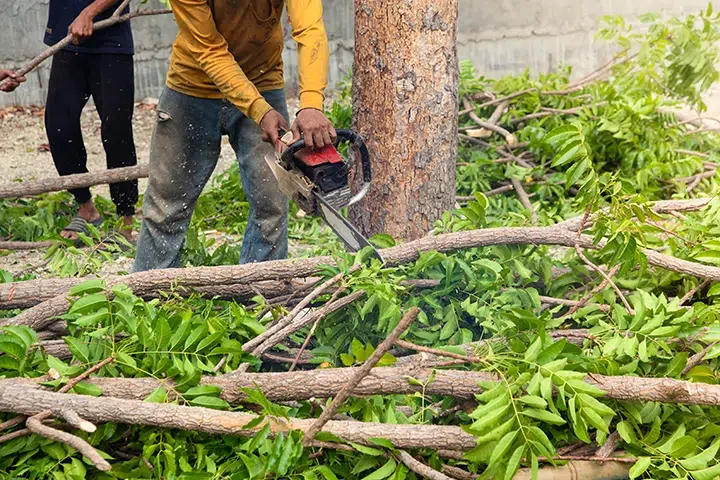
Trimming cuts away a few dead branches. This practice helps a strong plant grow better. Removal happens when the main trunk rots, but you cannot save a root system with severe decay. You have to cut down the whole plant when over half the branches die.
Why You Should Never Remove a Large Tree by Yourself in CT?
People often spend money to buy chainsaws, but do not know how to use them. Many do not use safety gear, and it ends up as a hospital visit. You do not know where the heavy wood will fall, and in worse situations, it may fall on your car. Spotting signs of hazardous tree removal means you need an insured team to handle the danger safely.
How TG’s Landscaping Handles Safe Tree Removal in Connecticut
TG’s Landscaping provides reliable landscaping services in Trumbull, CT, and nearby towns. We help homeowners and businesses in Fairfield, Easton, Shelton, Southport, Stamford, and Westport.
Our team offers property maintenance, seasonal cleanups, tree care, lawn care, hardscaping, fencing, and pond services. We focus on practical solutions for Connecticut’s weather and soil. Clients work directly with experienced landscapers who show up on time.
Our team values honest communication and advice for your home. We have a 4.8 Google Star Rating as we offer affordable prices with incredible results. We operate as a fully insured team.
Conclusion
You protect your property when you watch your yard closely. You save money when you remove dead wood fast. Look for bare branches, deep cracks, and sudden leaning. Call a professional team for safe and affordable help. TG’s Landscaping keeps your outdoor space healthy and beautiful.
FAQs
How to tell if a tree is dead or dormant?
You should scratch a small twig with your fingernail. If the interior is green, the tree is alive. If it looks brown, the tree has died.
Is it dangerous to keep a tree with mushrooms growing on it?
Yes. Mushrooms indicate the presence of rot inside the tree. People must remove these plants as weak roots will soon fail.
When does a leaning tree need to be removed?
You must cut the plant down when a storm causes a sudden tilt. A fast change means the roots broke underground, and the wood will fall.
Can a tree with a hollow trunk be saved?
No, a hollow trunk lacks solid support to hold heavy branches. High winds snap these weak plants in half, so you need to remove them fast.
How much does tree removal cost in Connecticut?
Prices change based on the height and location of the wood. You can find the exact cost when a local company inspects the yard.
Do I need a permit to remove a tree in my town in CT?
Many towns require permits for large trucks near public roads. You should call your local authorities to ask about the rules and regulations.
Should I call an arborist or a landscaper for tree removal?
You should hire a landscaper or local expert. Make sure they have the required license and insurance. These professionals use the right safety gear to protect your home from falling branches.