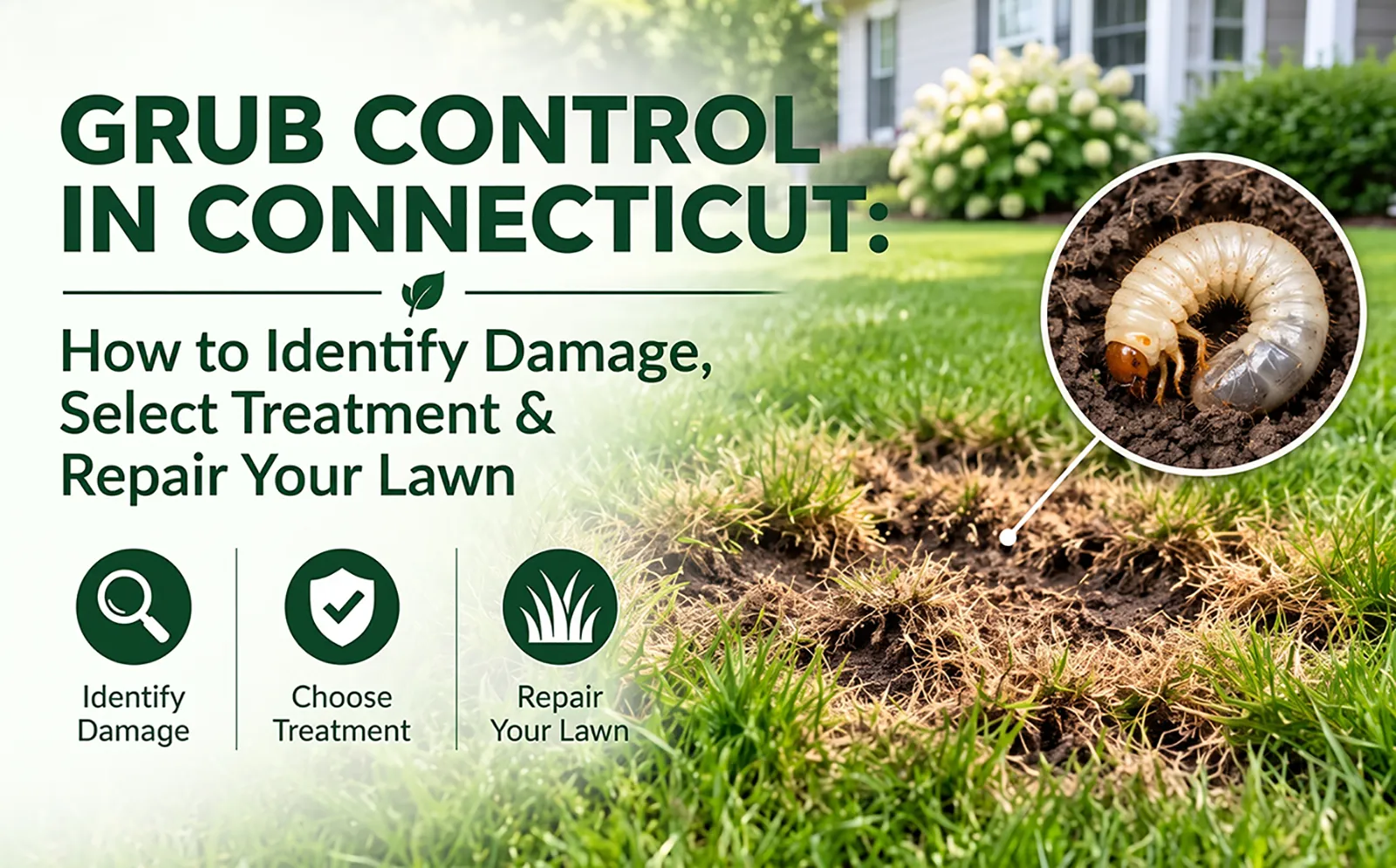
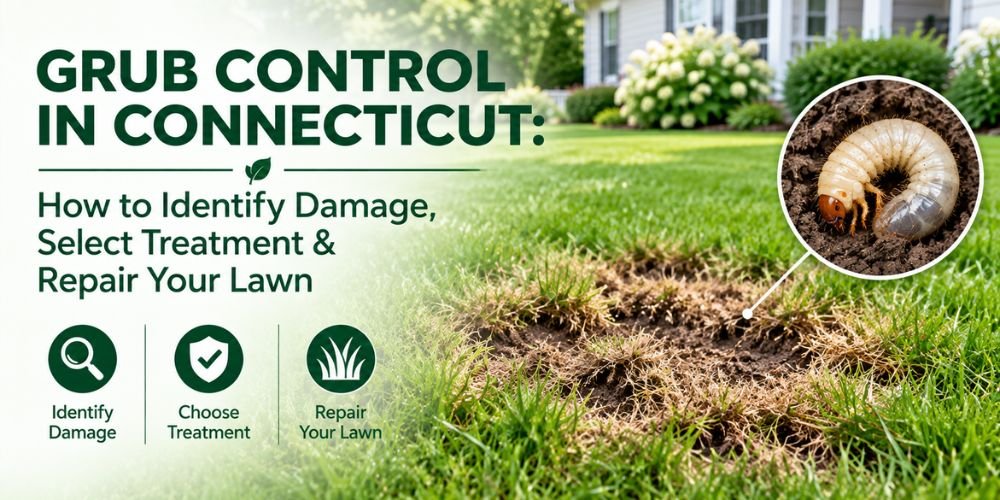
You have watered the brown patch by the walk twice this week. The rest of the lawn looks fine. Before you buy a grub product, turn over a small piece of grass at the edge of the patch. You want to see roots and soil, since the color of the grass won’t tell you which problem you have.
How to Tell If Your Connecticut Lawn Has Grub Damage?
White grubs feed underground and damage the roots grass needs to survive. You can spot loose sod if the roots have failed. People sometimes notice a torn patch first, after an animal has pulled up the turf. You still need to find the larvae before you choose grub control.
What you see | Possible cause | What to look for |
|---|---|---|
Brown grass lifts easily | Root damage may be caused by grubs | Check under the loose grass for grubs. |
Brown blades remain firmly anchored in the soil | Drought or turf disease may be responsible | Check soil moisture and leaf condition. |
Thin grass along a path | Repeated foot traffic and hard soil | Check for soil compaction. |
Small holes made overnight | Small animals may seek insects or worms | Check for larvae before treatment. |
A torn patch and a grub problem aren’t always the same job. Skunks also eat worms. You can find a few grubs beneath a hole without enough larvae to account for dead grass. People may need to check other reasons for patchy grass once they see the roots.
How to Check for Grubs and Decide If You Need Treatment?
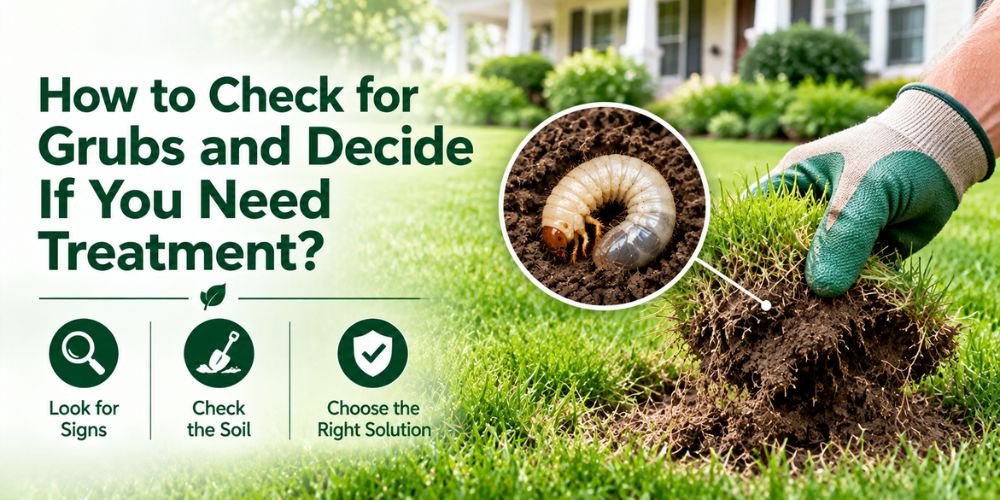
You don’t need to treat a lawn based on the evidence of one grub. Small grub populations can exist in a healthy lawn. The main question is whether enough larvae eat the roots to account for the damaged grass.
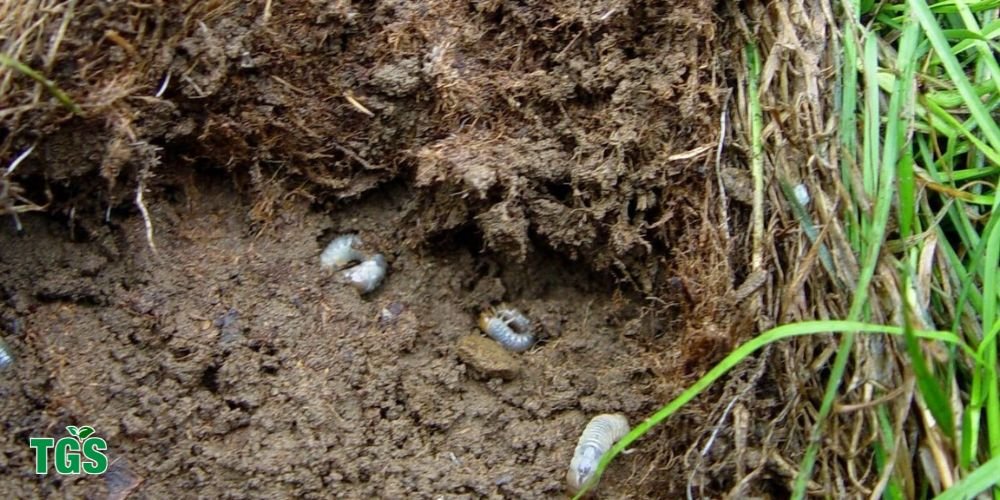
A white grub has a pale body with a brown head. Look closely, and you can see three pairs of legs near the head. The body often curls into a C when you move the soil.
Suppose you find eight grubs by the steps and one by the fence. You now have a reason to examine the first patch more closely. You still need to identify the grub and look for root loss before you choose treatment.
A count of six to ten per square foot often comes up in grub advice. The roots still matter. You may find six under grass with weak roots and six under thick turf, with different damage in each spot. Identify the grub as well as the root loss before you choose grub worm control.
When to Start Treatment for Grubs Control in Connecticut?
Grubs spend cold weather deeper in the ground. Once the soil warms after winter, older larvae return to the roots to eat. You may see damage now, but this is a tough stage to treat. A product that works on small young grubs won’t necessarily give the same result on those older larvae.
Season | Grub activity | What the homeowner can do |
|---|---|---|
After winter | Older grubs return near the roots | Check areas damaged in the previous season. |
Early summer | Adult beetles are active | Check for any known or confirmed problems from the previous year. |
Late summer | Newly hatched grubs start to eat roots | Schedule an inspection in areas of damage. |
Fall and winter | Grass activity decreases as soil temperatures drop | Repair damaged grass and maintain records |
Fall and winter | Grub activity slows as soil temperatures drop | Repair damaged grass and keep records. |
One yard can warm sooner than the lot next door. A sunny patch beside a driveway and a patch under trees don’t follow the same soil schedule. When you arrange grub control in central Connecticut, ask how the firm will choose the date. The answer should refer to the grub stage and the label for the product.
Grub Preventer or Grub Killer? Which Choice Is Right?
You use a preventive treatment to stop serious damage before the young larvae cause harm. Once you confirm active grubs, a curative treatment may suit the lawn. The choice may seem simple, but different products work against different grub stages.
Purpose | Protect a lawn with past grub damage | Handle a lawn with active grubs |
Purpose | Protect a lawn with a record of grub damage | Address a current lawn infestation |
Target | Mainly young grubs | Certain active grubs, as the label specifies |
Most serious disadvantage | May have little effect on older grubs | May have less effect later in the season |
Main disadvantage | May be less effective against older grubs | May be less effective later in the season |
BioAdvanced Grub Killer Plus is one name people may recognize from a store shelf. Treat the bag’s label as the source for the formula in your hand. A web article may refer to an older product. You can show a photo of the label to a licensed applicator before you decide.
People who see BioAdvanced Grub Killer Plus online still need to check the actual bag at the store. A brand can sell more than one formula. Take a photo of the full label and ask a licensed applicator to confirm the use. An out-of-state guide cannot do this check for you.
Each grub type needs a suitable response. Some lawns can recover through better turf care. Substantial root damage with a high grub count calls for a closer pest assessment. These options have different limits.
Homeowners have two separate questions here. Does the lawn need pest control, or does the grass need better care? A patch with live roots and few larvae may recover without an insecticide. A patch with many larvae and lost roots needs a different plan.
The numbers of beneficial nematodes, selected grub species, and nematode type are listed in relation to soil conditions.
Option | Where help is possible | What limits the result |
|---|---|---|
Preventive insecticide | Lawns with a known repeat problem | Wrong date or grub stage |
Beneficial nematodes | Selected grub species | Soil conditions and nematode type |
Milky spore | Japanese beetle grubs | Does not control other common white grubs |
Good lawn care practices | Lawns with weak roots | Cannot revive dead grass |
A biological treatment needs a match with the grub species. You should ask which insect the method controls and what evidence supports the choice. A natural product does not work on every grub.
Connecticut Grub Control Rules and Treatment Safety!
The pesticide rules limit the products lawn firms can use. The state classifies neonicotinoids for plant use as restricted-use products. Further state limits take effect on October 1, 2027. Lawn use generally needs state approval under these limits if other effective control options are unavailable. The law lists specific exceptions.
Before the visit, ask, ‘Which product will you put on the lawn?’ The full name lets you look up the label. You also need the return time for children and pets. Show the applicator any flowers beside the patch or a stream near the lot.
People who search for pest control should confirm lawn service. A firm such as Mosquito Squad CT deals with a different pest. A mosquito visit won’t tell you what lives under the turf.
Why Grub Treatments Fail and How to Avoid Common Mistakes?
Say the lawn beside your driveway turns brown in July. You assume grubs caused the patch and buy a treatment. Two weeks later, the same patch looks worse. If dry soil or a disease caused the damage, the grub product never addressed the cause. A look below the grass at the start would have helped you choose the next step.
The product may have reached the lawn too late. A treatment for new larvae may do little once grubs grow larger. Check the water requirements on the label too, since a missed step can affect the result.
Dead grass presents a separate problem. Even if you kill the grubs, the roots won’t come back. Your grub control company should explain the pest plan and turf repair as two jobs.
How to Repair Grub-Damaged Grass in CT?
After you confirm a grub problem, check how much live turf the lawn has left. Grass with healthy crowns and some roots may regrow. Grass with dead roots needs seed or sod. You can avoid a full reseed if part of the patch still has live grass.
Clear dead grass from each bare spot so seed can touch the soil. Hard ground needs attention before new roots can spread. Choose a seed mix for the sun or shade on your lot. Late summer through early fall usually gives cool-season grass a better start than midsummer heat.
Read the label before you reseed after treatment. Some products affect the order of lawn work. New grass needs time and suitable conditions to fill the damaged area.
How to Prevent Grub Damage in Future Seasons?
Take a photo of each damaged patch and note the grub count. Next year, you can check those same places before you buy a treatment. People don’t need to repeat a pesticide dose simply because they used one last season. Healthy roots and a low count may call for lawn checks rather than another product.
A soil test can help you choose fertilizer for the lawn you have. A suitable seasonal lawn care plan can also help turf recover from stress. The same applies to homeowners who seek grub control in Somers, Connecticut. Start with past damage and inspect the grass. Decide on treatment based on what you find.
Hire Us for Professional Grub Assessment and Lawn Recovery in Fairfield County?
If the same patch dies each year, ask someone to examine the roots before you pay for fresh seed again. The visit should give you a cause for the damage and a plan you can follow.
People who compare pest control Connecticut companies may need soil care as well as pest help. TG’s Landscaping offers lawn care and restoration services in Trumbull. Ask which service fits your yard.
Conclusion
Pick a spot at the edge of the brown grass. You can lift a small sample there and look at the roots. Keep a count if you find grubs. Compare the sample with one from green turf before you buy a product. These two samples give a lawn expert more to work with than a photo of brown grass.
FAQS
- Which Part of the Year Suits Grub Control in Connecticut?
Late summer is a time when young grubs are generally easier to manage. Any earlier preventive treatment depends on a documented risk and the registered product’s label. - Can You Treat Lawn Grubs After Winter?
Treatment after winter can have less effect on older grubs. First, confirm whether those larvae caused the damage. - What is the difference between a grub preventer and a grub killer?
Preventers act against the next hatch of young larvae. Grub killers treat larvae active under the lawn now. A label check tells you which stages a specific product covers. - How many grubs per square foot justify treatment?
The widely cited range of six to ten grubs is only a guideline. A healthy lawn may tolerate a count that causes substantial damage to stressed turf. - Do moles mean I have grubs in my lawn?
Moles also feed on earthworms. The presence of tunnels alone cannot tell you how many grubs are present. - Will Grub Control Keep Skunks Off My Lawn?
There is no guarantee. Skunks seek more than one food source and may return for other food. - Do I need grub control every year?
You may need no treatment. Check for a history of root damage and a high grub count. - Do beneficial nematodes work on Connecticut lawn grubs?
Some nematode species can help if the pest and soil conditions suit the method. Ask what evidence supports the nematode the lawn expert proposes. - Does milky spore control all types of lawn grubs?
Milky spore primarily targets Japanese beetle larvae. You need a different option for other common white grubs. - Why didn’t the grub treatment work?
The insects may not have caused the damage, the grub stage may have been unsuitable for the treatment, or the roots may have been too weak to recover. - When can children and pets return after grub treatment?
Follow the label for the specific product and the licensed applicator’s instructions. - Can I Overseed After Grub Control?
You may be able to do both jobs in the same lawn care plan. Read the grub product label for any wait period before seeding. Discuss the plan with the applicator before you reseed.