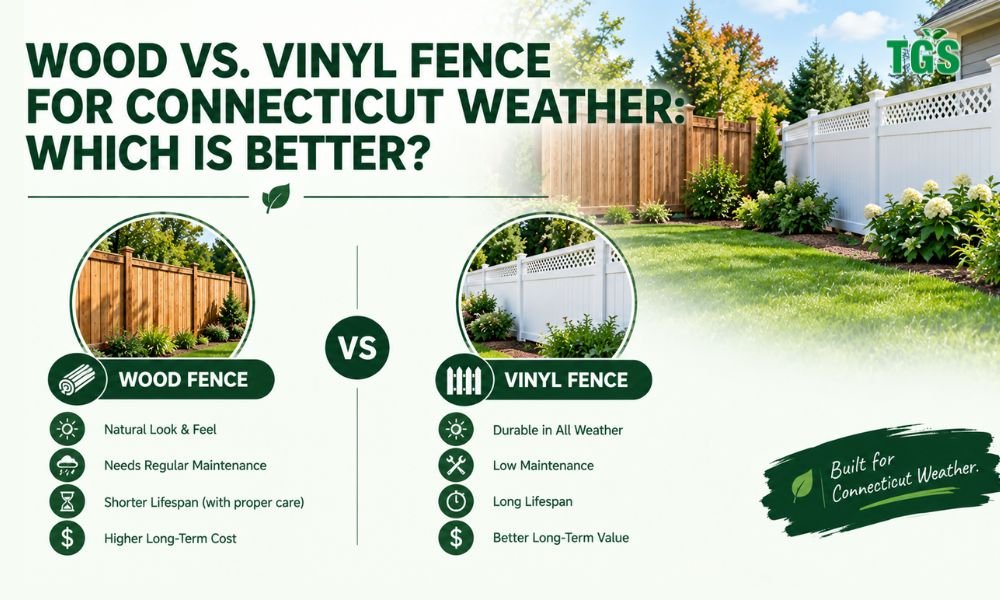
Connecticut weather can be hard on a fence. Frost can move posts, while wet weather can wear down wood. Homes near the coast also deal with salt air. If you are comparing Wood vs. Vinyl Fence, think about upkeep, cost, and the look you want.
Vinyl needs little care. It does not rot, and most dirt comes off with water and mild soap. Wood has a warmer look and more finish options. It also tends to cost less upfront. Poor post work can shorten the life of any fence. In Connecticut, frost and wet soil can cause movement. Proper depth and drainage help keep the fence stable.
How Connecticut Weather Affects a Fence?
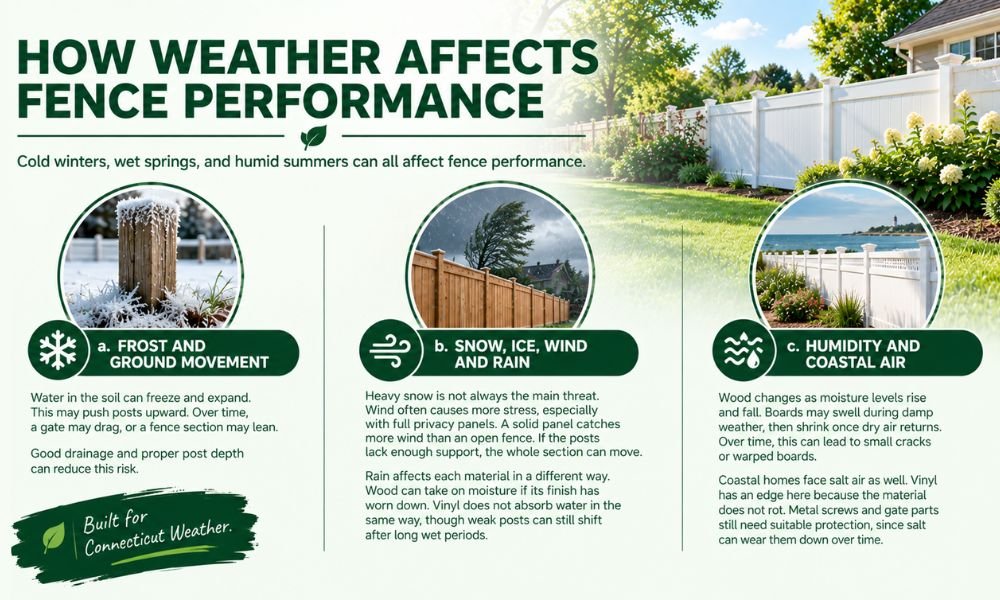
Cold winters, wet springs, and humid summers can all affect fence performance.
a. Frost and Ground Movement
Water in the soil can freeze and expand. This may push posts upward. Over time, a gate may drag, or a fence section may lean. Good drainage and proper post depth can reduce this risk.
b. Snow, Ice, Wind, and Rain
Heavy snow is not always the main threat. Wind often causes more stress, especially with full privacy panels. A solid panel catches more wind than an open fence. If the posts lack enough support, the whole section can move.
Rain affects each material in a different way. Wood can take on moisture if its finish has worn down. Vinyl does not absorb water in the same way, though weak posts can still shift after long wet periods.
c. Humidity and Coastal Air
Wood changes as moisture levels rise and fall. Boards may swell during damp weather, then shrink once dry air returns. Over time, this can lead to small cracks or warped boards.
Coastal homes face salt air as well. Vinyl has an edge here because the material does not rot. Metal screws and gate parts still need suitable protection, since salt can wear them down over time.
Benefits, Issues & Maintenance of Wood Fences in Connecticut
Wood remains a common choice across Connecticut for a simple reason. It looks good around many types of homes. It also gives homeowners more control over style.
a. Top Reasons Homeowners Choose Wood
Wood can suit both classic and modern yards. You can choose a privacy fence, a picket style, or a more custom design. Paint and stain give you another level of control, so the color can change later without a full replacement. Repairs are often simple too. If one board breaks, a contractor can usually replace that board alone.
b. Problems Wood Can Develop
When water stays in wood for too long, soft spots can appear near the base. Boards may also crack or warp after years of wet and dry weather. Some wood types are more open to insect damage. Pressure-treated lumber and durable species can reduce that risk.
c. How Much Care Wood Needs?
Wood does need some attention. Check the fence once or twice a year for loose boards, cracks, or soft areas. Leaves and plants should not stay pressed against the lower boards because they hold moisture. A stain or sealer may also be needed from time to time, based on the wood type and exposure.
Wood vs. Vinyl Fence Complete Comparison
| Factor | Wood Fence | Vinyl Fence |
| Initial price | Usually lower | Usually higher |
| Long-term care | More upkeep | Less upkeep |
| Rot resistance | Can rot | Does not rot |
| Insect resistance | Depends on wood type | High |
| Winter performance | Good with proper posts | Good with proper posts |
| Appearance | Natural and easy to change | Clean and uniform |
| Repairs | Often simple by board | A panel may need replacement |
| Privacy | Strong options | Strong options |
| Typical lifespan | About 10 to 20 years | About 20 to 30 years |
| Best fit | Lower upfront cost and natural style | Low upkeep and moisture resistance |
These lifespan ranges are not guarantees. A fence on dry soil may last longer than the same fence in a wet yard. Sun exposure can affect the material too. Wind also matters.
What Wood and Vinyl Cost in Connecticut in 2026
Wood usually has the lower starting price. For many Connecticut projects, wood may cost about $25 to $50 per linear foot after installation. Vinyl often falls closer to $30 to $60 per linear foot.
A tall fence costs more than a short one. Extra gates raise the price too. Removal of an old fence can add labor, while a steep or rocky yard may require more work. Vinyl often costs more on day one. Over the years, though, wood may need more paid care.
Which Material Works Better for Privacy and Pets?
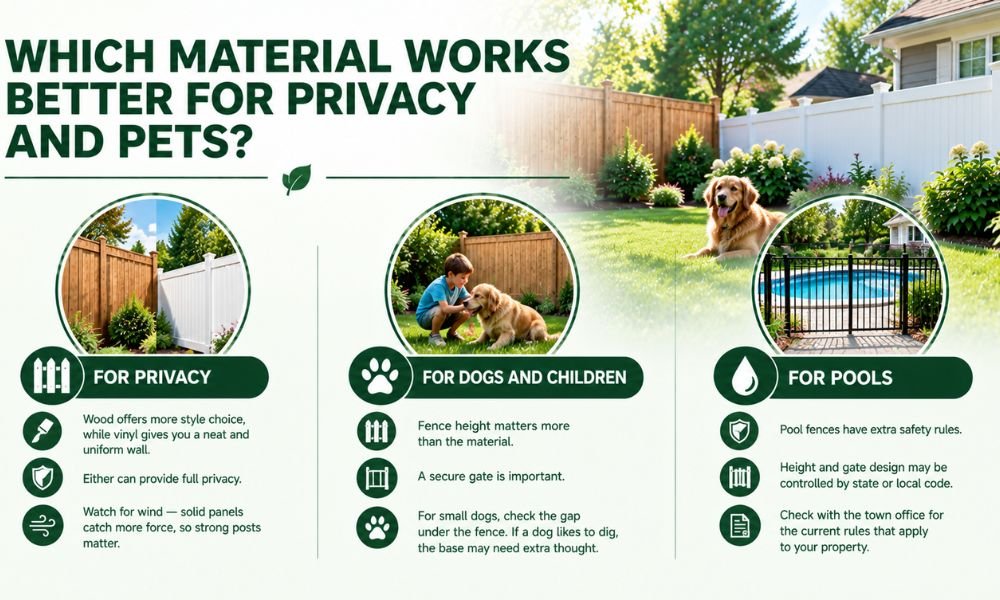
For Privacy
Wood offers more style choice, while vinyl gives you a neat and uniform wall. If full privacy is the goal, either one can do the job. The main point to watch is wind. Solid panels catch more force, so strong posts matter.
For Dogs and Children
Fence height matters more here than the material. A secure gate is also important. For small dogs, look closely at the gap under the fence. If a dog likes to dig, the base of the fence may need extra thought before work starts.
For Pools
Pool fences have extra safety rules. Height and gate design may both be controlled by state or local code. Local rules can also add more detail. Before you choose a pool fence, check with the town office for the current rules that apply to your property.
Details That Make a Fence Last Longer
Much of a fence’s life depends on the work below ground. Posts need enough depth for local frost conditions. Soil type matters as well. A wet yard may need more drainage work than a dry one.
Slope can also change how the fence should be set. Gates deserve extra support because they place more stress on the same posts every day. When you ask for quotes, do not focus on panels alone.
Ask about post depth and footing method. Ask how the contractor plans to deal with wet ground. Those answers can tell you a lot.
Permits and Property Lines in Connecticut
a. Check the Rules in Your Town
Fence rules vary across Connecticut. One town may require zoning approval, while another may only review certain heights or locations. Do not assume the same rule applies everywhere. A quick call to the local zoning office can save a lot of trouble later.
b. Make Sure the Property Line Is Right
An old fence is not proof of the legal boundary. If the line is unclear, a survey may be worth the cost. It can help prevent a dispute with a neighbor once the new fence is in place. A short talk with the neighbor can also help if the crew needs access from both sides.
c. Watch Front Yards and Corner Lots
Front-yard fences may face tighter height limits. Corner lots can have extra rules near roads because drivers need a clear view. Historic areas may also place limits on style or material. The safest approach is to check the exact address before you settle on a final design.
Questions to Ask a Connecticut Fence Contractor
A quote should tell you more than the final price. Look for the total length and height. Gate count should be clear too.
Then ask a few basic questions:
- How deep will the posts go?
- What type of footing will be used?
- Is old fence removal part of the price?
- Who handles permit work if one is needed?
- How will the crew deal with wet or rocky soil?
Which Fence Makes More Sense for Your Home?
Vinyl is a strong option for homeowners who want to spend less time on fence care. It works well in damp yards and near the coast because rot is not a concern.
Wood may suit you better if you prefer a natural look. You can change the color later, and repairs are often simple. The lower starting price can also help on larger properties.
FAQs
Is Vinyl or Wood Better for Connecticut Winters?
Both can work well when the posts are set properly. Vinyl handles moisture better, while wood performs well when the boards have good protection and the yard drains well.
Which Fence Lasts Longer in Connecticut?
Vinyl often lasts longer with less care. Wood can also last for many years, but upkeep has a bigger effect on how long it stays in good shape.
Is Vinyl Worth the Higher Price?
It can be if you want less work over time. For homeowners who do not want to stain or seal a fence, the higher first cost may be easier to accept.
Does Wood Rot in Connecticut?
Yes, it can. Wet soil and trapped moisture raise the risk. Good drainage and regular surface care can help slow the problem down.
Can Vinyl Crack in Cold Weather?
Yes, although cold alone does not mean the fence will fail. Vinyl becomes less flexible in low temperatures, so a hard impact can cause a crack more easily.
Which Fence Needs Less Maintenance?
Vinyl needs less care. Wood may need stain, paint, or sealer over its life.
Which One Costs Less at the Start?
Wood is usually cheaper upfront. The final cost still depends on height and style. Site conditions can also change the price.
How Deep Should Fence Posts Go in Connecticut?
A contractor should choose the depth based on the site rather than use the same setup for every property.
Do I Need a Fence Permit in Connecticut?
That depends on the town. Some towns require approval, while others have different local rules based on location or height.
Is Wood or Vinyl Better for a Dog Fence?
Both can work. Vinyl gives you a solid barrier with little upkeep. Wood gives you more design choice and can be easier to repair in small sections.