Starting a lawn from bare soil feels exciting. Then comes the harder question: which method is the best lawn installation? Sod, seed, and hydroseed each have advantages. Connecticut weather makes timing especially important. Soil, sunlight, drainage, and lawn use matter too. We look at those details before recommending anything. That helps us build lawns suited to real properties.
Quick Answer: Sod vs Seed vs Hydroseed in Connecticut
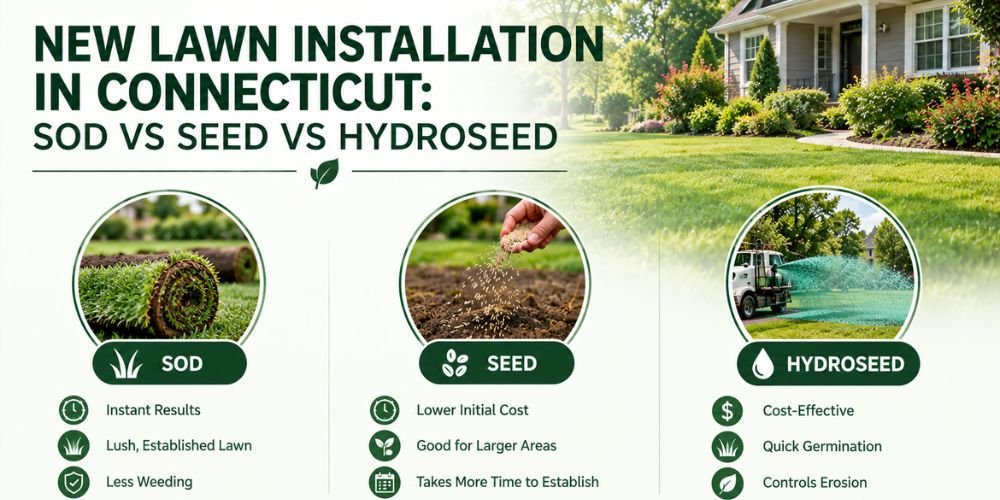
Sod gives quick results, seed costs less, and hydroseeding works well for large or sloped areas. Choose the best option based on your budget, soil, and lawn conditions in Connecticut.
| Method | Cost | Establishment | Best For |
|---|---|---|---|
| Sod | Highest | Fastest | Quick lawn results |
| Grass Seed | Lowest | Slowest | Budget-friendly projects |
| Hydroseeding | Moderate | Moderate | Large or sloped areas |
What Are Sod, Seed and Hydroseeding?
- Sod is already-grown grass cut into manageable sections. We place it over properly prepared soil. The roots then begin growing into that soil.
- Seed takes a different route entirely. We place grass seed across prepared ground. It then needs moisture, warmth, and good soil contact.
- Hydroseeding sprays seed with water and mulch. The mixture can also contain fertilizer and amendments. The mulch helps hold moisture around developing seed. It also helps protect exposed soil from erosion. None of these methods replaces proper soil preparation. A poor base can weaken even excellent grass.
How Much Does a New Lawn Cost in Connecticut?
New lawn costs depend on installation method, lawn size and site preparation. These are general estimates, not TG’s pricing; grading, soil improvements and irrigation can increase costs.
| Method | Estimated Cost | 1,000 Sq. Ft. | Potential Extra Costs |
|---|---|---|---|
| Sod | $1–$6/sq. ft. | $1,000–$6,000 | Grading, soil, delivery |
| Grass Seed | $450–$1,800/project | Depends on scope | Soil prep, irrigation |
| Hydroseeding | $650–$2,200/project | Depends on scope | Grading, soil, irrigation |
Estimates are for general budgeting, not contractor quotes. Actual Connecticut costs vary by site conditions, project size, and preparation needs.
How Long Does It Take to Establish a New Lawn?
Sod roots in about 2–3 weeks, while seed takes longer and hydroseeding falls in between. Water consistently and limit foot traffic until roots strengthen.
| Establishment Stage | Sod | Grass Seed | Hydroseeding |
|---|---|---|---|
| Initial rooting | About 2–3 weeks | Several weeks | Several weeks |
| First mowing | Once rooted and established | When grass reaches mowing height | When grass reaches mowing height |
| Regular foot traffic | After strong rooting | After the lawn is established | After the lawn is established |
| Watering needs | Frequent during rooting | Keep the seedbed consistently moist | Keep the seedbed consistently moist |
Timelines vary with weather, grass type, soil conditions, and watering. Avoid mowing or heavy traffic before the lawn is ready.
When Is the Best Time to Install a New Lawn in Connecticut?
Late summer to early fall is ideal for planting cool-season grass in Connecticut. UConn recommends mid-August through late September, when warm soil and cooler air support root growth. Spring installation is also possible, but approaching summer heat can stress young grass. Sod offers more flexibility, while frozen or waterlogged soil should be avoided.
| Season | Sod Installation | Grass Seeding | Hydroseeding |
|---|---|---|---|
| Spring | Good | Suitable | Suitable |
| Summer | Challenging | High risk | High risk |
| Late summer–early fall | Excellent | Best window | Excellent |
| Late fall | Weather dependent | Limited window | Weather dependent |
| Winter | Generally unsuitable | Generally unsuitable | Generally unsuitable |
For Connecticut lawns, late summer to early fall is generally the best time to establish cool-season grass. Actual timing depends on soil conditions, temperatures, rainfall, and the installation method.
Which New Lawn Method Is Right for Your Yard?
The best choice depends on how quickly you want results, your budget, and your yard’s condition.
- Choose sod for an almost instant green lawn.
- Choose grass seed for a budget-friendly option when you can wait for growth.
- Choose hydroseeding for covering larger areas, including suitable slopes.
Before you decide, consider your yard: Does it get enough sunlight? Does water collect after rain? Is the soil in good condition? Will children or pets use the lawn regularly?
TG’s Landscaping evaluates these factors before recommending a method. We tailor the installation to your property, explain the next steps and keep you updated throughout the project.
Which Grass Types Grow Best in Connecticut?
Connecticut lawns do best with cool-season grasses. The right choice depends on sunlight, soil, and how much use your lawn gets.
- Kentucky bluegrass: Ideal for sunny lawns and good recovery from foot traffic.
- Tall fescue: A good choice for drought tolerance and busy yards.
- Fine fescue: Better suited to many shaded areas with lower water and fertilizer needs.
- Perennial ryegrass: Germinates quickly and tolerates regular use.
Not sure which grass to choose? Consider your yard’s sunlight, drainage, and foot traffic. A seed blend can combine different strengths, while available sod varieties may limit your options.
What Soil Preparation Does a New Lawn Need?
Good grass starts underneath the grass itself. We first look at grading and surface conditions. Uneven ground can create drainage and mowing problems. Soil testing tells us what the soil lacks. It also checks acidity and nutrient levels. Lime should follow test results, not guesswork. Topsoil can help when existing soil performs poorly. Compost may improve soil where conditions call for it. Different soils need different amendments and treatments. We prepare the surface before placing grass. Sod needs firm contact with prepared soil underneath. Seed also needs close contact with the seedbed. Hydroseeding still depends on proper grading beforehand.
What Does Connecticut’s Phosphorus Law Mean for a New Lawn?
Connecticut restricts phosphorus on established lawns. The restriction applies after two growing seasons. New grass has a specific phosphorus exception. Starter fertilizer may contain phosphorus when establishing grass. Soil testing should still determine whether phosphorus is needed. Phosphate products also face seasonal restrictions. Connecticut prohibits these applications from December 1 through March 15. Extra rules apply near streams, ponds, and other water. Buffer requirements can depend on application equipment. We account for these requirements during planning.
What Maintenance Does Each Method Need in the First Year?
A new lawn always needs some attention afterward. Sod needs frequent watering while roots establish. Seed needs moisture until germination and early growth. Hydroseed needs similar care during its early stages. Mowing should begin only after sufficient growth. Weeds can still appear around young grass. Thin spots may require additional seed later. Heavy rain can also create erosion problems. Slopes deserve extra attention after storms. No installation method makes maintenance disappear. Our goal is to make that maintenance manageable.Common New Lawn Installation Mistakes in Connecticut
- Seeding outside Connecticut’s strongest growing window.
- Ignoring drainage before planting grass.
- Skipping soil testing before adding amendments.
- Choosing grass without checking sunlight levels.
- Walking heavily across newly planted areas.
- Watering heavily at once instead of consistently.
- Installing grass over compacted soil.
- Ignoring slopes and potential soil erosion.
- Expecting seed to look finished immediately.
DIY or Professional New Lawn Installation: Which Makes Sense?
A small, level lawn may be suitable for DIY seeding. Large properties usually demand more preparation and equipment. Slopes create additional grading and erosion concerns. Soil preparation can also involve heavy machinery. Professional installation saves homeowners considerable physical work. It can also reduce avoidable establishment problems. We handle preparation, placement, and project coordination. TG’s Landscaping also brings extensive local experience. Our team has served Trumbull and nearby communities. We understand how local properties can vary.
| DIY Installation May Work Best When | Professional Installation Is Better When |
|---|---|
| You're installing grass in a small, mostly level area. | You're covering a large lawn or an extensive property. |
| The soil is in good condition and needs little preparation. | The site needs major grading, topsoil, or soil improvement. |
| The area is easy to access and work on. | Access is difficult or equipment is needed. |
| You have time for installation, watering, and ongoing care. | You need coordinated installation and a more efficient timeline. |
| The ground is stable with minimal slope or drainage issues. | Slopes, erosion, or drainage problems need attention. |
The right choice depends on lawn size, soil conditions, site preparation, and your available time. Address grading and drainage issues before installing new grass.
Professional New Lawn Installation in Connecticut
At TG’s Landscaping, we look beyond the grass itself. Our team checks grading, soil, sunlight, and drainage first. We serve Trumbull and surrounding Fairfield County communities. We also offer lawn care after installation. This means one team can handle your ongoing lawn maintenance.
For continued care, explore our ongoing lawn maintenance.
Conclusion
Choosing new grass should start with your property. Sod, seed, and hydroseed each solve different problems. Your budget matters, but so does the site. Connecticut’s weather makes installation timing important. Soil preparation can matter even more than grass choice. At TG’s Landscaping, we assess those factors first. Then we recommend what makes sense for your lawn. Our goal is simple: build grass that lasts.
FAQs
Should I sod or seed my new lawn in Connecticut?
Choose sod when speed matters most. Choose seed when upfront cost matters more. Site conditions should guide the final decision.
What is the best time to seed a lawn in CT?
Late summer and early fall usually provide the best conditions. UConn favors mid-August through late September.
When can I lay sod in Connecticut?
Sod works during suitable growing conditions. Avoid frozen, saturated, or excessively dry soil.
Is hydroseeding better than seed or sod?
Not necessarily. Hydroseeding can suit larger or sloped properties. Sod remains better when quick coverage matters.
How much does sod installation cost in Connecticut?
Current national estimates range around $1-$6 per square foot. Connecticut pricing depends on labor and site conditions.
How much does hydroseeding cost in CT?
Current estimates commonly range from $650-$2,200. Lawn size and preparation affect the final price.
Can I lay sod in winter in Connecticut?
Winter usually creates poor rooting conditions. Frozen soil also makes proper preparation difficult.
How late can I seed a lawn in CT?
Late September is generally the safer cutoff. Later seeding leaves less time before winter.
How long does it take for sod to root?
Initial rooting commonly takes around two to three weeks. Strong establishment takes longer.
How often should I water new sod or seed?
Keep newly planted areas consistently moist. Avoid letting seedbeds dry between watering sessions.
Can I lay sod on a slope?
Yes, but slopes require careful preparation. Proper grading helps reduce runoff and erosion.
What grass is best for Connecticut lawns?
Kentucky bluegrass, tall fescue, fine fescue, and perennial ryegrass can all work well. The best choice depends on sunlight, soil, traffic, and water.