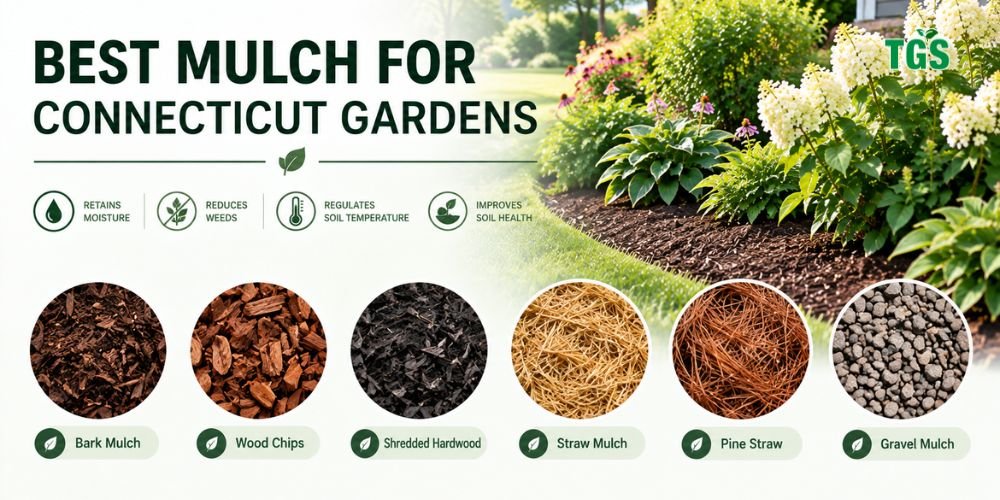
Connecticut gardens face seasonal challenges: wet soil and weeds in spring, heat and dry conditions in summer, and leaves, rain, and cold in fall.
The right mulch helps your landscape handle these changes. But not every mulch works equally well here. Your plants, soil, and garden location all matter.
Why Mulching Matters More in Connecticut Than You Think?
Connecticut gardens face seasonal challenges: wet soil and temperature swings in spring, dry heat in summer, heavy rain in fall and freezing conditions in winter. Mulch helps buffer these repeated weather changes. It also slows weeds and reduces watering needs. Organic mulch eventually adds useful organic matter.
7 Best Mulch Types for Connecticut Gardens (Ranked by Performance)
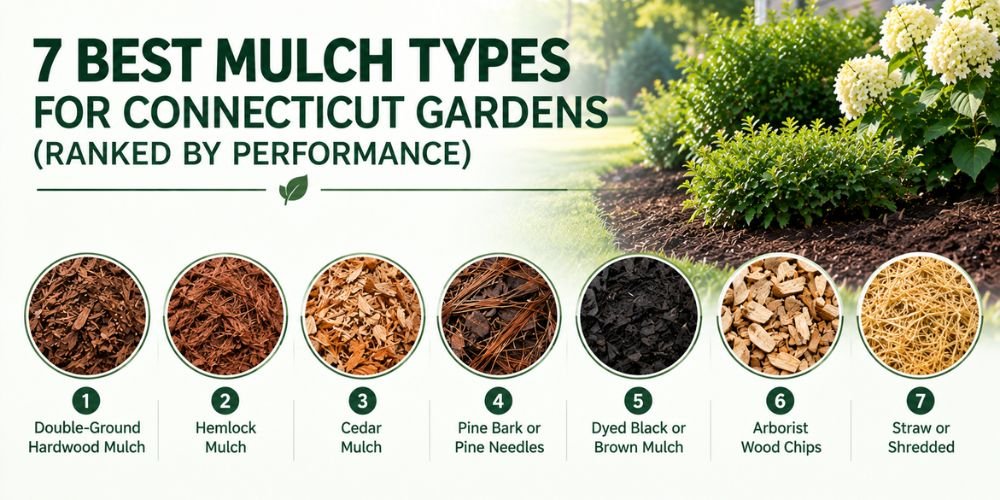
- Double-Ground Hardwood Mulch works well across Connecticut landscapes. Its fine texture creates an even, tidy surface. It also breaks down and improves soil over time. Choose aged material instead of fresh, sour mulch.
- Hemlock Mulch offers a clean, natural reddish-brown appearance. It holds together well during Connecticut rain and wind. Hemlock also suits ornamental beds and foundation plantings.
- Cedar Mulch resists decay and keeps its texture longer. Its natural aroma also discourages some landscape pests. Cedar works especially well around shrubs and perennial beds.
- Dyed Black or Brown Mulch creates a strong finished appearance. Quality dyed mulch can perform well in landscapes. Always check the source and material ingredients first. Avoid unknown recycled wood products near vegetables.
- Pine Bark or Pine Needles suit acid-loving garden plants. Azaleas, rhododendrons, and blueberries can benefit. Pine needles also resist compacting when applied properly.
- Arborist Wood Chips work well beneath established trees. They cost less when locally sourced from tree work. Use fresh chips rather than questionable stockpiled material. Keep chips away from trunks and plant crowns.
- Straw or Shredded Leaves provide affordable seasonal coverage. Chopped leaves work better than whole leaves. Straw helps protect vegetable beds during colder months. Choose clean straw without unwanted weed seeds.
When to Mulch in Connecticut: Exact Spring and Fall Timing?
Connecticut does not have one perfect mulch date. Soil conditions matter more than the calendar alone. For spring beds, aim for late April through May. Wait until soil drains and plants begin growing. Mulching too early can hold excessive spring moisture.
For fall protection, mulch after soil temperatures decline. Mid-October through November usually works for established beds. Avoid covering frozen ground with thick fresh mulch. First remove weeds and clear damaged plant material. Then spread mulch across clean, prepared soil. Connecticut’s changing freeze-thaw cycles make timing important.
How Much Mulch to Use: Depth, Coverage and Calculation Guide
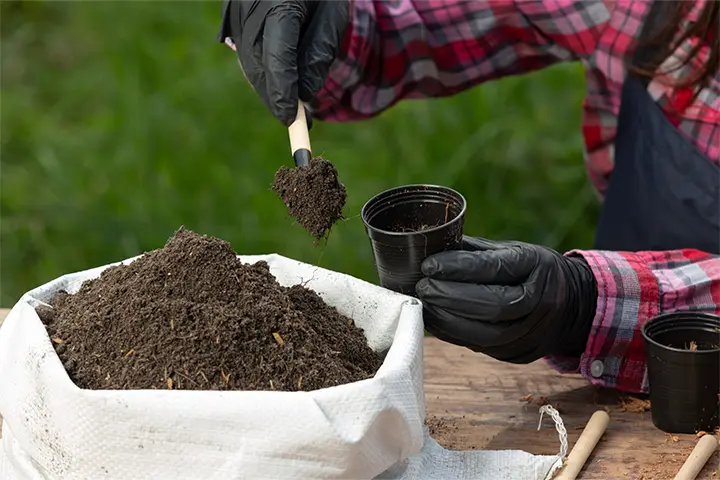
Most Connecticut landscape beds need two inches. Some situations can support three inches safely. Avoid automatically spreading four inches everywhere. Excess mulch can block oxygen around plant roots. It can also create overly wet soil conditions. UConn recommends keeping typical mulch layers between one and three inches.
| Mulch Depth | Coverage From One Cubic Yard | Best Use |
|---|---|---|
| 1 inch | About 324 sq. ft. | Light refresh |
| 2 inches | About 162 sq. ft. | Most planting beds |
| 3 inches | About 108 sq. ft. | Deeper seasonal coverage |
Use this simple calculation for ordering mulch: Square feet × depth in feet ÷ 27 = cubic yards. For example, a 1,000-square-foot bed needs about 6.2 cubic yards. That amount covers the bed to a depth of two inches. Ordering slightly extra helps account for uneven ground. TG’s Landscaping can assess bed conditions before spreading material. That helps avoid expensive over-ordering and wasted mulch.
Dyed vs Natural Mulch in CT: Safety, Longevity and Soil Impact
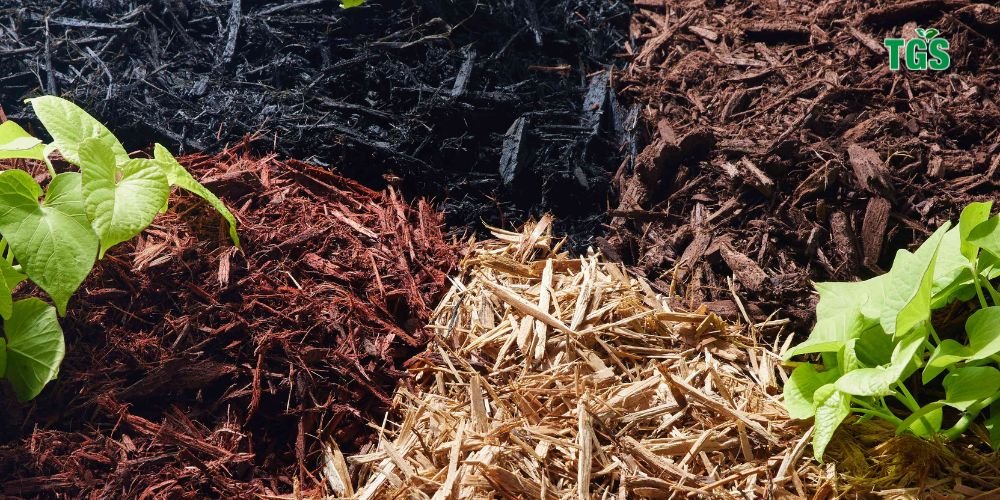
| Factor | Dyed Mulch | Natural Mulch |
| Appearance | Strong, uniform color | Natural wood tones |
| Longevity | Color fades over time | Naturally weathers |
| Soil impact | Depends on source material | Adds organic matter |
| Vegetable beds | Use verified products carefully | Usually simpler choice |
| Maintenance | May need color refresh | Needs periodic replenishment |
Natural mulch remains a practical choice for Connecticut gardens. Quality dyed mulch can also work around ornamental plants. The bigger concern involves the material underneath. Some recycled wood products may contain unwanted substances. Ask suppliers what materials they process before buying.
Mulch for Specific Plants: Acid-Lovers, Veggies, Trees, and Perennials
Different plants benefit from different mulch choices. Acid-loving plants suit pine needles or pine bark. Blueberries, azaleas, and rhododendrons fit this group. Vegetable gardens need clean, reliable mulch materials. Straw, compost, and suitable wood materials can work.
Trees need special care around their trunks. Keep mulch away from the trunk flare. A two-to-three-inch layer usually works around trees. Aged chips or shredded bark make practical choices.
Perennial beds benefit from evenly spread organic mulch. Keep crowns exposed to prevent rot problems. Refresh the surface when decomposition lowers coverage. This approach protects plants without burying their growing points.
6 Costly Mulching Mistakes Connecticut Homeowners Make
- Creating mulch volcanoes around tree trunks causes damage.
- Spreading excessive mulch can suffocate shallow roots.
- Covering weeds without removing them encourages future growth.
- Using fresh sour mulch can harm nearby plants.
- Buying unknown recycled mulch creates unnecessary material concerns.
- Ordering too much mulch wastes money and storage space.
Should You Remove Old Mulch? When to Refresh vs Replace
You usually do not need complete removal. First, check the existing mulch depth and condition. Rake compacted material to restore airflow and appearance. Remove mulch that smells sour or looks contaminated. Refresh when the existing layer has noticeably settled. Replace material when weeds have heavily colonized it. Connecticut landscapes commonly need refreshing every one to three years.
Bulk vs Bagged Mulch in CT: Cost Comparison and Where to Buy
Bulk mulch usually makes sense for larger Connecticut beds. It reduces packaging waste and often lowers material costs. Bagged mulch works better for smaller planting areas. It also offers easier storage between projects.
For Fairfield County properties, delivery matters too. Bulk mulch delivery saves repeated trips to suppliers. TG’s Landscaping can coordinate material delivery with installation. Homeowners should compare delivered volume, not sticker price. Ask about mulch type, source, and delivery fees. Local arborist chips may sometimes have lower costs. Availability can vary by season and supplier.
Professional Mulch Installation: When It’s Worth the Cost
Professional mulching in Connecticut helps when beds cover large areas. It also helps around mature trees and detailed plantings. Proper edging creates cleaner borders and prevents spreading. Correct depth protects roots while controlling weeds. TG’s Landscaping can prepare beds before installation begins. That includes clearing weeds and distributing mulch evenly.
Conclusion
The best mulch depends on your garden’s needs. Connecticut weather makes proper timing especially important. Material choice also matters for long-term soil health. Hardwood suits many general landscape beds effectively. Pine products suit acid-loving plants particularly well. Wood chips work well around established trees. Straw and leaves offer affordable seasonal protection.
The biggest difference comes from proper installation. Use the right depth for each planting area. Keep mulch away from trunks and plant crowns. Choose clean materials from reliable local sources. Then refresh the layer as it naturally settles.
For Fairfield County homeowners, TG’s Landscaping can handle the full process. From material selection through final spreading, careful preparation matters. A properly mulched garden looks better and performs better.
FAQs
What is the best mulch for Connecticut gardens in 2026?
Double-ground hardwood works well for most Connecticut beds. It offers good coverage and breaks down naturally. Hemlock and cedar suit ornamental landscape areas. Pine products work particularly well for acid-loving plants. Arborist chips suit established trees and larger shrubs.
When should I mulch my garden in CT (exact dates)?
Aim for late April through May for spring mulching. Wait until the soil drains and plants start growing. For fall, target mid-October through November. Weather can shift these windows by several weeks. Avoid mulching over frozen or waterlogged soil.
How deep should mulch be in Connecticut gardens?
Most planting beds need around two inches. Some beds can safely use three inches. Keep tree mulch around two-to-three inches deep. Never pile mulch against tree trunks. Excess depth can restrict oxygen and moisture movement.
Is dyed mulch safe for plants and soil in CT?
Quality dyed mulch can work around ornamental plants. Always check the product’s source and ingredients first. Avoid questionable recycled wood around edible crops. Natural mulch offers a simpler option for vegetable beds.
Should I remove old mulch before adding new in Connecticut?
Usually, complete removal is unnecessary. Measure the existing depth before adding anything. Rake and loosen compacted mulch first. Remove sour, contaminated, or heavily weeded material. Add fresh mulch only when needed.
How much mulch do I need for a 1,000 sq ft bed?
A 1,000-square-foot bed needs about 6.2 cubic yards. That calculation uses a two-inch mulch depth. A three-inch layer requires about 9.3 cubic yards. Measure the actual bed before placing your order.
Can I use wood chips from tree trimming as mulch in CT?
Yes, established trees can benefit from arborist chips. Use fresh chips from reputable tree work. Do not use unknown stockpiled material near sensitive areas. Keep chips away from trunks and plant crowns. Connecticut guidance specifically supports wood chips for landscape uses.
What mulch is best for vegetable gardens in Connecticut?
Clean straw works well around many vegetables. Chopped leaves can provide affordable seasonal coverage. Compost can also improve soil while mulching. Wood chips work better around paths and established plants. Choose clean materials from a reliable source.