Thin and patchy lawns are common in Connecticut. Heavy or compacted soil, summer heat, winter stress, shade, and other lawn problems can weaken cool-season grasses and leave bare spots.
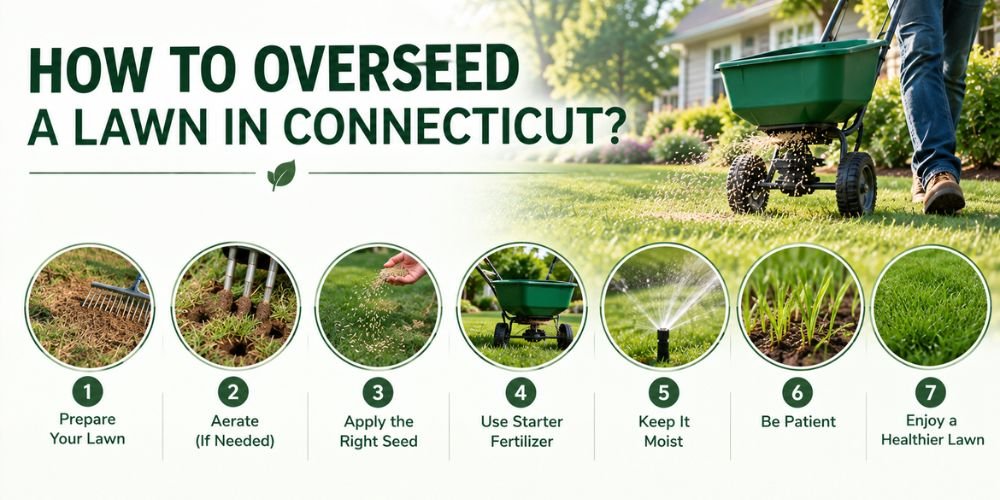
Overseeding can help fill thin areas and create a denser lawn, but timing and preparation matter. For Connecticut lawns, mid-August through mid-September is generally one of the best windows for overseeding because temperatures are cooler, soil moisture is more favorable, and weed competition is lower.
Before overseeding, address issues such as severe soil compaction or poor soil conditions. UConn notes that seeding alone may not provide lasting results when the existing soil is causing recurring lawn problems.
How to Water After Overseeding?
Watering is essential for new grass seed to germinate. Keep the soil surface consistently moist with light, frequent watering until the new grass begins to establish. Avoid letting the seedbed dry out or applying so much water that seed is washed away or the soil stays saturated.
Once the new grass is established, gradually reduce watering frequency and encourage deeper root growth.
When Can You Mow After Overseeding?
You may begin to mow your lawn once the new seeds have germinated and the new grass is approximately 2-3 inches tall. It is recommended that you do not use a rotary mower during this time as the blades could damage the newly emerged seedlings. A reel mower will provide less damage to the new growth.
Do not cut your lawn until the newly planted grass reaches 3-4 inches in height. Cutting the lawn with a mower prior to that time will pull up the young plants. When you cut your lawn for the first time, make sure to adjust the cutting height as high as possible.
Connecticut’s Phosphorus Fertilizer Law and Overseeding
Many people who shop for lawn products at garden centers in Connecticut are surprised by the state’s restrictions on the use of phosphorus-based fertilizers on existing lawns. However, there is an exception to these rules; that is for new seeding. Overseeding falls into this category, so if you’re overseeding your lawn, you can use a starter fertilizer. It’s always best to save your receipt from buying fertilizer to show you used it legally.
Regulatory Summary Box:
Under Connecticut law, phosphorus fertilizers are not allowed to be applied to existing turf. There is an exception for starter fertilizers used during the establishment of new grass or over-seeding of bare spots. You must apply the fertilizer according to the label’s instructions. Maintain a copy of your store receipt as evidence of your lawful application of the product.
Common Overseeding Mistakes Connecticut Homeowners Make

There are several common mistakes that CT homeowners commit when they overseed their lawn.
Warning List
- Seeding in July and August is too hot for cool season seeds to sprout; they will bake and die before they can crack open. Delay seeding until at least the end of August.
- The use of an aerator is required in order for seeds to successfully establish in the hard pack of Connecticut’s clay soil.
- A poor choice of grass seed can result in an unsatisfactory outcome for the lawn.
- Overwatering: Soil that has become saturated with water will provide an environment where fungi can grow, and the excessive amount of water can wash away the seeds.
- Underwaterings: If the soil dries out even once while your seeds are germinating, they will die forever.
- Mowing too early: Most people start using their lawn mower before the new seeds have had time to establish themselves.
- Raking the area lightly before planting will enhance the likelihood of successful germination by improving the seed’s contact with the soil.
What If Overseeding Doesn’t Fix Your Lawn?
Sometimes reseeding isn’t the solution to your issue. If your lawn continues to fail even though you have done everything correctly when reseeding, there is a more severe problem with your yard. Knowing how to identify these issues will save you money and time.
a. Severe Compaction
Connecticut’s clay soil has the potential to become so compacted that it will completely prevent root development.
b. Poor Drainage
Water that stands on top of the soil after it rains will cause the root system to rot, and can also lead to issues with moss and fungi.
c. Heavy Thatch
A thick thatch layer (more than 1/2″) creates a barrier that prevents the seeds from coming into contact with the soil.
d. Extensive Bare Areas
If more than 50% of the lawn is bare or dead, it would be better to completely renovate the entire lawn rather than continuously try to fix the damaged sections.
e. Incorrect Grass Type for Sun/Shade
Choose a grass seed that is compatible with the amount of sunlight that reaches the area where you intend to grow the grass.
f. Serious Weed or Disease Problems
When there is a significant weed problem or disease problem, planting new seed in areas where there is currently a fungal issue or high levels of weeds will only waste money on purchasing additional seed.
How Long Does It Take to See Results After Overseeding?
In addition to the length of time needed for the new grass seed to germinate, it can take an entire growing season to have a fully and evenly covered lawn. It is important to remember that you should not judge the success of your overseeding project based upon only two weeks of growth. An overseeded lawn in September will look very different come next May. Patience is as important to successful overseeding as the correct techniques are.
DIY vs Professional Overseeding in Connecticut

A single approach to treating your lawn may not be right for all circumstances. Use this list to determine if you need to treat your lawn and what method is most suitable.
Decision Checklist
Go DIY if your circumstances resemble this:
- Thin patches are covering a small amount (less than 25%) of the area of your lawn.
- You have access to a correct core aerator, either by purchasing one or renting it.
- You can water your garden every day, twice or three times, for up to two weeks.
- You have an accurate knowledge of what parts of your yard get sun or shade.
- You are now able to interpret your own UConn basic soil test report and make decisions based upon what is in it.
Contact a Professional If:
- A lot of the area where you grow grass has either no growth, dead growth, or patches.
- Previous attempts to overseed yourself have resulted in little to nothing.
- The soil of your property is compacted, has drainage issues, or needs grading.
- A recurring issue with weeds or diseases continues to return every year.
How Much Does Overseeding Cost in Connecticut?
If you have a larger yard or need to amend the soil prior to overseeding, then you can expect to pay even more. As far as price difference goes between doing it yourself and hiring a professional, the difference is much smaller than many homeowners anticipate.
Professional Overseeding and Lawn Care in Connecticut
TG’s Landscaping is a professional company that provides the homeowners of Connecticut with a variety of options including; overseeding, aerating, and complete renovations to their lawns. We have experience working with Connecticut soils and we understand the climate patterns as well as the types of grasses that can thrive in this environment.
Conclusion
When done correctly, overseeding a Connecticut lawn can be accomplished successfully. Your best time to overseed is late summer/early fall, and that timeframe is definite. Select a seed blend specifically for the amount of sunlight your yard receives.
You can expect to have compaction, drainage problems, and continuous weed growth handled by us at TG’s Landscaping. Please contact us today so we can begin working together to create a healthy, green lawn for you.
FAQs
- When is the best time to overseed a lawn in Connecticut?
The most optimal time to apply additional seed to an existing lawn in Connecticut would be during the fall months. - How late can I overseed in CT?
Mid-October is pretty much the latest date to get started on your lawn in Connecticut. Your new seed must have at least six to eight weeks of temperatures at or above fifty degrees Fahrenheit for the root system to develop. - How do I overseed my lawn in Connecticut?
In order to overseed your lawn in Connecticut you will need to take several steps. First, you should mow your lawn very low, perhaps to a height of 1-1.5 inches. This will help allow the seed to make contact with the soil. - Do I need to aerate before overseeding?
Yes, Connecticut’s clay-rich soil forms an almost solid barrier after many years. Core aeration breaks down the clay-rich soil and provides areas for the seeds to contact the soil. Skip this part of the process, and your seed germination rate will decline significantly. - Should I dethatch before overseeding?
If you have a thatch layer that is more than 0.5 inches in thickness, then you need to de-thatch. Any layer of thatch that is greater than 0.5 inches will prevent the seed from being able to reach the soil. - What grass seed is best for overseeding in Connecticut?
Most Connecticut homeowners will find that tall fescue mixes work well in both sunny and shady parts of their yard. Tall fescue can tolerate hot weather, drought conditions, and partial shade much better than many of the other cold climate grasses. - How often should I water after overseeding?
After you seed your lawn, you should water it 2 to 3 times per day for the first two weeks. During this time, make sure that the top 1 inch of soil is kept moist. - When can I mow after overseeding?
Wait until the new grass has reached a height of about 3-4 inches before mowing. This typically occurs within 3-4 weeks from when germination first started in CT. Adjust the mowing height so that only the top 1/3 of each blade of grass is cut. - Can I overseed in spring in Connecticut?
Spring overseeding can be done; however, the results produced are much less successful than those produced in the fall. The heat of summer will arrive before the cool-season grass has developed a robust enough root system. - Can I use weed-and-feed after overseeding?
No, do not use weed and feed until your new grass has grown for at least 1 month. Do not apply any type of herbicide until after you have mowed your new lawn 3-4 times. - Do I need starter fertilizer for overseeding?
Yes, starter fertilizer supplies new seedlings with both phosphorus and nitrogen so they can develop strong roots. Connecticut law permits application of starter fertilizer when overseeding, even though many communities.