Why Homeowners in Connecticut Prefer Local Plants?
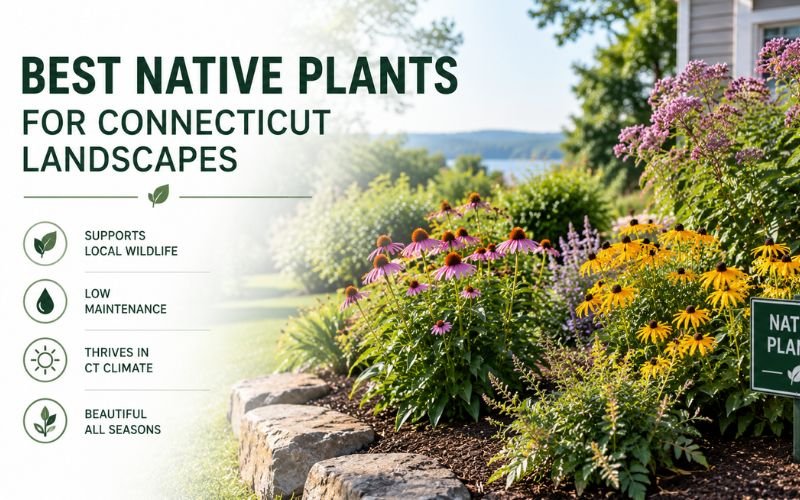
Local homeowners want yards that stay green with minimal effort. Picking the best native plants for Connecticut landscaping upgrades any property. Local flora handles area weather and soil naturally. These species require less water and zero chemical treatment. They feed regional songbirds and wild bees through each season. Local varieties also withstand native pests and plant disease.
Top 10 Native Perennials for Connecticut Beds!
Perennial flowers add rich color to sustainable landscaping in Connecticut. Homeowners pick these tough options to create easy garden beds in local yards.
1. Black-Eyed Susan
Bright yellow flowers open on this classic plant from July through fall. It handles dry soil and attracts butterflies to your yard. It reaches three feet tall in open sun.
2. Purple Coneflower
Rich pink petals display on this strong flower throughout warm months. It survives summer heat and feeds local bees. It grows four feet tall in sunny spots.
3. Wild Bergamot
Soft purple blossoms cover this sweet summer plant. It stands up to dry spells and feeds neighborhood pollinators. It reaches four feet in full sun or light shade.
4. Joe-Pye Weed
Huge pink flower clusters top this giant plant as summer ends. It likes wet soil and feeds monarch butterflies. It grows seven feet tall in bright sun.
5. New England Aster
Dark purple blooms decorate this late plant into late fall. It survives early frost and helps monarchs. It reaches five feet tall in full sun.
6. Butterfly Weed
Vivid orange clusters cover this bright plant across warm months. It thrives in dry earth and feeds monarch caterpillars. Expect height up to two feet in full sun.
7. Wild Columbine
Red and yellow bells open on this early bloomer each spring. It thrives in rock beds and draws hummingbirds. Height stops near two feet in partial shade.
8. Goldenrod
Yellow plumes cover this bright fall favorite as summer ends. It grows in poor ground and feeds bees before winter. It reaches four feet in open sun.
9. Bee Balm
Scarlet blossoms cover this bold option during midsummer. It withstands high heat and draws hungry hummingbirds. Expect growth near four feet in partial shade.
10. Sedum
Thick pink blossom clusters form on this sturdy species in autumn. Leaves store moisture to survive severe heat. Height stays under two feet in sunny locations.
Top Native Shrubs for Connecticut Yards
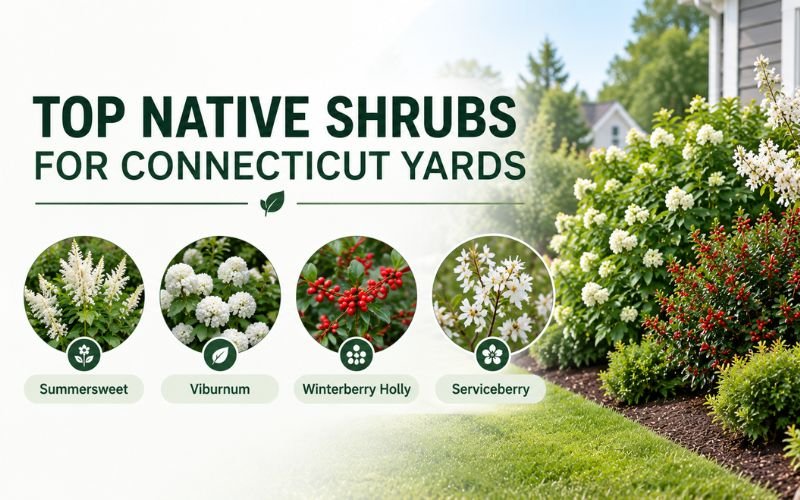
Selecting native shrubs and perennials in Connecticut creates clear structure and winter cover for wildlife. Property owners plant hardy shrubs to boost visual curb appeal.
1. Summersweet (Clethra alnifolia)
Sweet white flower spikes fill warm air each summer. This shrub grows well in damp earth and tolerates deep shade. Overall height reaches eight feet.
2. Viburnum (Viburnum species)
Spring blooms turn into deep red foliage every autumn on this flexible shrub. It survives harsh winters and feeds local songbirds. Height reaches ten feet.
3. Winterberry Holly (Ilex verticillata)
Red winter berries cover bare stems once autumn leaves fall off. This plant prefers wet ground and brightens dark yards. Expect height up to ten feet.
4. Serviceberry (Amelanchier canadensis)
White spring flowers yield sweet summer berries on this early bush. It accepts varied earth and attracts local birds. Height reaches fifteen feet.
5. Mountain Laurel (Kalmia latifolia)
Pink and white spring cups mark this evergreen state icon. It flourishes in acidic earth and woodland shade. Total height reaches fifteen feet.
Local Grasses and Ground Covers
Regional grasses add movement and soft visual texture across lawns. Property owners rely on these options to stabilize steep slopes and crowd out weeds.
1. Little Bluestem (Schizachyrium scoparium)
Blue stem shafts turn bright copper each fall on this prairie grass. It resists summer heat and poor ground. Total growth reaches three feet tall.
2. Switchgrass (Panicum virgatum)
Feathered seed heads form over this tough grass in late summer. It survives standing water and high wind. Overall height reaches six feet.
3. Pennsylvania Sedge (Carex pensylvanica)
Low green mats form a simple natural lawn alternative. This carpet plant grows well in dry shade under mature trees. Height stays under eight inches.
Regional Trees for Shade and Property Value
Native trees form the base of area yards while cutting residential cooling bills. Homeowners plant strong trees to secure long-term property values.
1. White Oak (Quercus alba)
Wide limbs and broad leaves form a thick canopy on this giant tree. It feeds native caterpillars and survives heavy storms. Total height reaches eighty feet.
2. Red Maple (Acer rubrum)
Brilliant scarlet leaves cover this fast grower every autumn. It tolerates wet lawn areas and varied earth. Expect height near sixty feet.
3. Eastern Redbud (Cercis canadensis)
Bright pink blossoms line bare spring branches on this small tree. It prefers woodland edges and rich earth. Total height reaches thirty feet.
Step-by-Step Native Garden Planning
A smart native plant garden design in CT keeps your yard healthy through every season. Good layouts align with the natural shape of your land.
1. Match Options to Site Factors
Check daily sun hours and ground moisture levels before purchase. Place low-maintenance native plants in dry sunny areas to cut work. Group species with equal water needs in shared beds. Plant shade natives in moist ground beneath large trees.
2. Build Layers for All Seasons
Combine tall canopy trees with medium shrubs and low ground covers. Pair early spring blooms with late fall grasses for constant color. Position evergreen shrubs near entry paths to preserve green color during winter months.
3. Start Small and Expand Later
Work on one single bed near your entryway or patio first. Test drought-tolerant native plants in Connecticut to check local soil fit. Add fresh garden beds each year as your confidence grows.
4. Local Sourcing for Native Flora
Buy species at local plant nurseries or regional conservation sales across Fairfield County. Select options without trade labels or complex hybrid names. Area botanical centers also run spring sales with healthy native wildflowers.
How TG’s Landscaping Upgrades Your Property?
We help you select and install top local choices for your lawn. Our team handles practical yard work across Trumbull and Fairfield. We also cover Easton, Shelton, Southport, Stamford, and Westport. TG’s Landscaping handles lawn service and tree work, with seasonal yard cleanups and plant installation.
You work directly with fully insured landscapers holding a 4.8 Google Star Rating. We bring fair pricing and eco-friendly methods to every job site. We offer thirty years of experience. Call us today to plan your outdoor space.
Frequently Asked Questions
Which native species grow easiest across local yards?
Black-Eyed Susan and Purple Coneflower grow well in most locations. They handle tough ground and dry summer stretches without extra care.
Do local plants truly need less lawn care?
Yes. Native species adapted to regional weather patterns over centuries. They survive freezing winters and hot summer spells without extra fertilizer.
Which plants draw maximum local pollinators?
Set out native plants for pollinators in CT like Bee Balm or Joe-Pye Weed. Goldenrod also feeds local honeybees and butterflies all summer long.
Which options keep deer away naturally?
Select deer-resistant native plants like Mountain Laurel or Wild Bergamot. Pennsylvania Sedge also works well. Deer avoid bitter tastes and strong plant scents.
Do native choices work in shaded yard spots?
Yes. Wild Columbine and Summersweet thrive underneath dense tree branches. Pennsylvania Sedge adds green color to dark locations.
Where can homeowners purchase native flora locally?
Buy species at regional plant sales or dedicated native nurseries. County conservation centers also carry them. Verify growers skip synthetic pesticide sprays.
What determines local garden installation costs?
Overall prices depend on total yard size and plant counts. Regional landscapers offer clear quotes after reviewing your property conditions.