Deer roam freely across Fairfield County, and they search for food daily. Forests provide less food now, so these animals move into our local yards. They eat your beautiful flowers and destroy expensive shrubs. Homeowners spend thousands on replacements, so you need to outsmart these hungry animals.
Fences cost too much, and repellents wash away in the rain. Plant choice provides your best defense against animal damage. Our team understands local deer habits well. You can trust our local knowledge to protect your property.
What “Deer-Resistant” Really Means (No Plant Is 100% Deer-Proof)?
Hungry animals will eat any leaf to survive harsh winters. Resistant means deer dislike the taste or avoid fuzzy textures. They leave toxic plants alone. A young animal might test a new leaf, but they usually spit the mouthful out. You will see minor bites on leaves, but your main plant survives intact.
Top Deer-Resistant Shrubs for Fairfield County
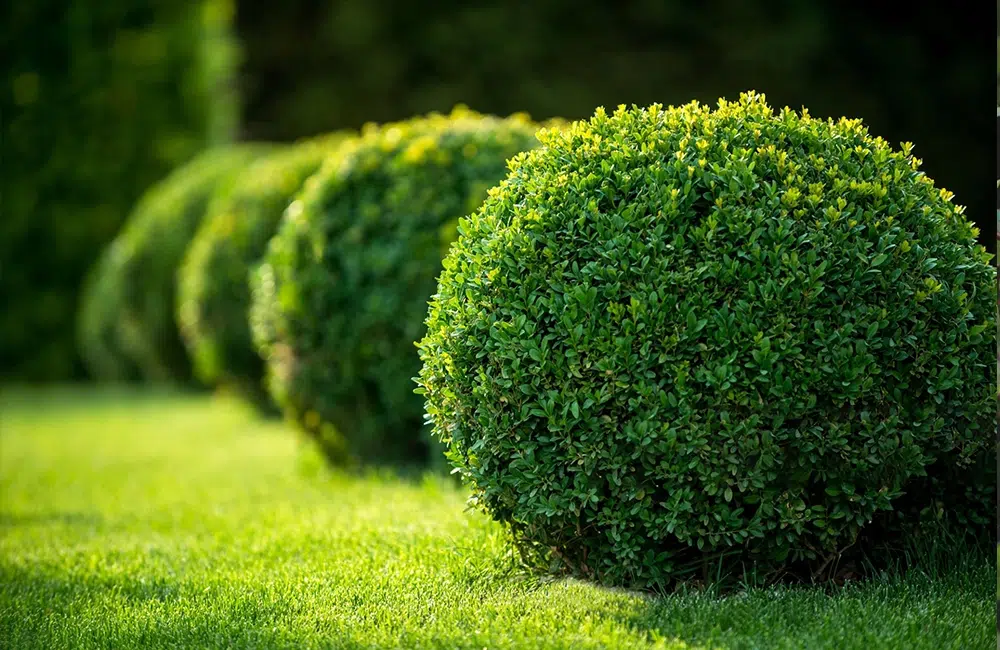
Deer can damage shrubs throughout Fairfield County, especially in areas near wooded lots and natural feeding areas. Choosing shrubs that deer tend to avoid can help protect your landscape and reduce replacement costs.
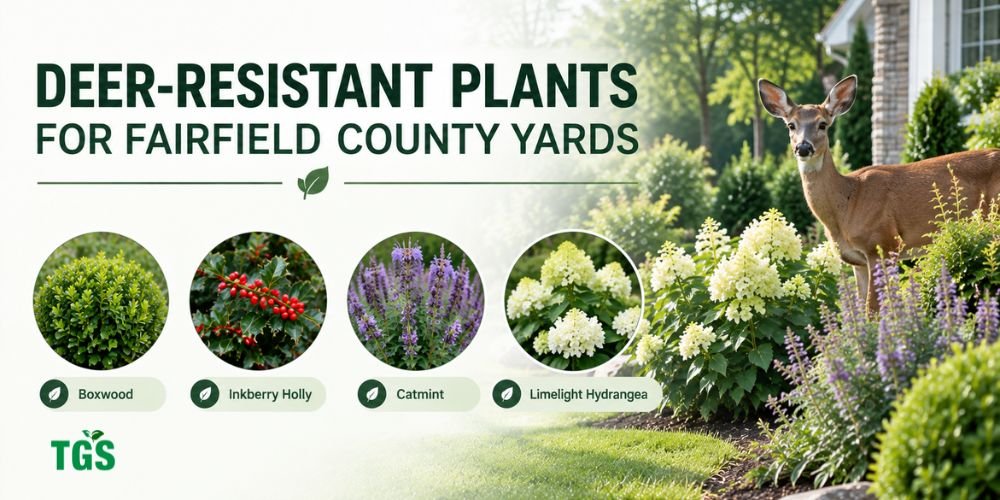
- Boxwood: Evergreen foliage provides year-round structure and is generally less attractive to deer.
- Inkberry Holly: This Connecticut native evergreen has dense foliage and works well for hedges and foundation plantings.
- American Holly: Its spiny leaves make it less appealing to browsing deer while adding year-round greenery.
- Juniper: Tough, needle-like foliage makes many juniper varieties a good choice for areas with deer pressure.
- Spirea: Provides seasonal flowers and is generally less attractive to deer than many other flowering shrubs.
- Viburnum: Some varieties are relatively deer-resistant and can provide flowers, berries, and privacy. Deer resistance can vary by species.
- Mountain Laurel: Connecticut’s state flower is an evergreen native shrub that deer generally avoid.
- Rhododendron and Azalea: These shrubs can be browsed by deer, so choose varieties carefully if deer pressure is high.
Choosing the Right Flowering Shrubs that are Deer Resistant
The best shrubs depend on your property’s sunlight, soil, drainage, available space, and deer pressure. Mixing evergreen shrubs with flowering and native varieties can create a more attractive and resilient landscape.
Keep in mind that no shrub is completely deer-proof. Deer may browse plants they normally avoid when food is scarce. Combining deer-resistant plant choices with fencing or other deer-management methods can provide better protection.
What Perennial Flowers are Deer Resistant for Connecticut Gardens?
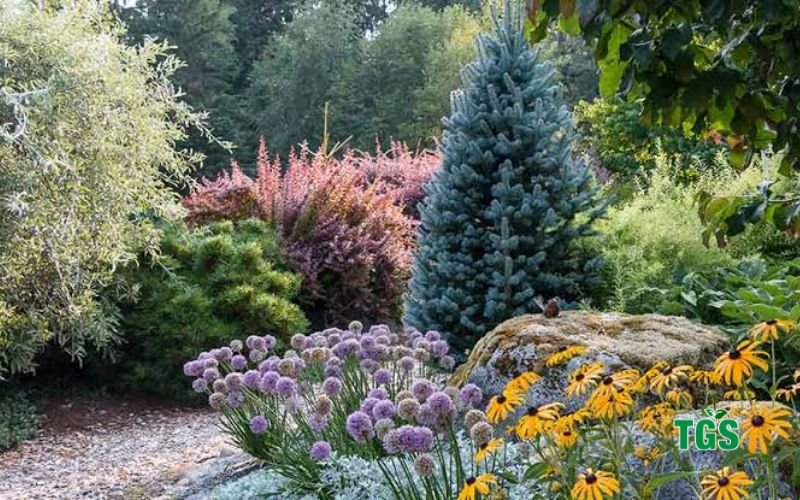
Perennials come back every year, making them a practical choice for Connecticut gardens. If deer regularly browse your plants, choose varieties with strong scents, fuzzy or rough foliage, or other characteristics deer tend to avoid.
- Black-Eyed Susan: Bright yellow flowers add summer color, while its foliage is generally less appealing to deer.
- Catmint: Its strong fragrance makes it a popular deer-resistant choice.
- Russian Sage: Fragrant foliage and its silvery appearance can help discourage deer browsing.
- Salvia: Colorful flowers attract pollinators and are generally less attractive to deer.
- Yarrow: Its textured, fern-like foliage is typically less appealing to deer.
- Peony: Coarse foliage and stems make peonies a good option for areas with deer pressure.
- Hellebore: Early blooms and foliage that deer generally avoid make hellebores useful for spring gardens.
- Lamb’s Ear: Its soft, fuzzy leaves are less attractive to deer.
- Bleeding Heart: This shade-friendly perennial is generally avoided by deer and adds delicate spring flowers.
Connecticut Native Plants Deer Tend to Avoid
Native plants can add seasonal color while supporting local pollinators and wildlife. Some Connecticut natives are also considered deer-resistant, including:
- New England Aster: A late-season bloomer that provides color and supports pollinators.
- Wild Bergamot: Its fragrant foliage is generally less attractive to deer and beneficial to pollinators.
- Joe-Pye Weed: A tall native perennial that adds height and summer color to larger beds.
- Goldenrod: A hardy late-season bloomer with textured foliage.
- Mountain Laurel: Connecticut’s state flower and a native evergreen shrub that deer generally avoid.
No plant is completely deer-proof. Hungry deer may browse plants they normally avoid, especially when other food sources are limited. For better protection, combine deer-resistant plants with proper garden placement, fencing, or other deer-management methods.
Extra Tips to Protect New Plants from Deer Damage!
Young plants need extra help because animals love tender shoots. You should spray repellents monthly. You must alternate the spray brands. Animals adapt to smells quickly. You can wrap young trunks with wire. Our team installs protective nets, so we secure your investment. Our experts apply safe solutions.
Plants to Avoid If You Have Heavy Deer Pressure
Animals treat some plants like candy, so you must avoid specific species. A hungry herd will destroy them fast.
- Arborvitae: Animals eat these bushes down to the trunk.
- Hostas: These are a favorite animal snack.
- Daylilies: Animals consume the blooms immediately.
- Tulips and Crocus: Herds dig up the bulbs.
- Rhododendron: Some varieties taste delicious to animals.
- Hydrangea: Herds chew the large leaves.
- Azalea: Hungry animals eat the delicate flowers.
- Vegetables and Herbs: Animals will consume your entire crop.
You must plan carefully. Our team can remove these risky choices, and we replace them with safe options. You will save money on replacements. We offer affordable solutions for homeowners. Our crew provides dependable advice. We have 30 years of experience with local yards.
How to Design a Deer-Resistant Garden That Still Looks Beautiful?
Step 1. Plant fragrant herbs around the border.
Step 2. Mix different textures.
Step 3. Use sharp native grasses for barriers.
Step 4. Hide sensitive flowers behind toxic bushes.
Step 5. Block main paths with large shrubs.
When to Call a Professional for Deer-Resistant Landscape Design?
You should call us when animals destroy your yard, as large herds require expert plans. We have 30 years of experience, and our team understands local animal habits. We provide premium-quality materials with punctual service. You can trust our dependable crew. Call our local experts today.
Conclusion
You deserve a beautiful yard. Animals should not ruin your hard work, so we can transform your outdoors. TG’s Landscaping provides the best solutions. Our local knowledge sets us apart. We have 30 years of experience with local yards, and you get a dependable team.
We offer affordable prices for everyone. We carry premium-quality material, and we offer different sizes. You can host outdoor parties again, and everyone loves the final look. Call our crew today, and we will protect your home.
FAQs
Do repellents work permanently?
No repellent lasts forever. Rain washes the spray away, so you must reapply the formula often. Plant choice is a better strategy. Our team picks the right species.
Will deer eat toxic leaves?
Animals usually avoid poisonous flora. A desperate animal might take one bite, but it will spit the leaf out immediately. Your bushes will survive the winter. We install safe options.
Can fences stop hungry herds?
Only tall fences work well. Animals easily jump over short barriers. Tall fences cost a lot of money. Our plant choices save you cash. We offer affordable yard plans.