A beautiful lawn leaves a great first impression of your home. It also increases the selling price because people value good lawns. It gives the impression that your home was cared for. Trimming is a key part of lawn care. Trees grow fast and can create a messy look, which is why tree trimming is essential.
So when should you actually trim? Here’s a straightforward tree pruning schedule for Connecticut, broken down by season and by tree type, so you’re not left guessing.
Why Timing Matters for Tree Trimming in Connecticut?
We get real seasons here in CT, and your trees feel every one of them. Trim at the wrong point in that cycle, and it increases susceptibility to pests and fungal infections. Trim at the right point, and the cut seals up on its own in no time.
Do you know the best time to trim the lawn? You cannot simply do it in any season. The best time for most trees is late winter, but a few exceptions exist. Continue reading to learn more!
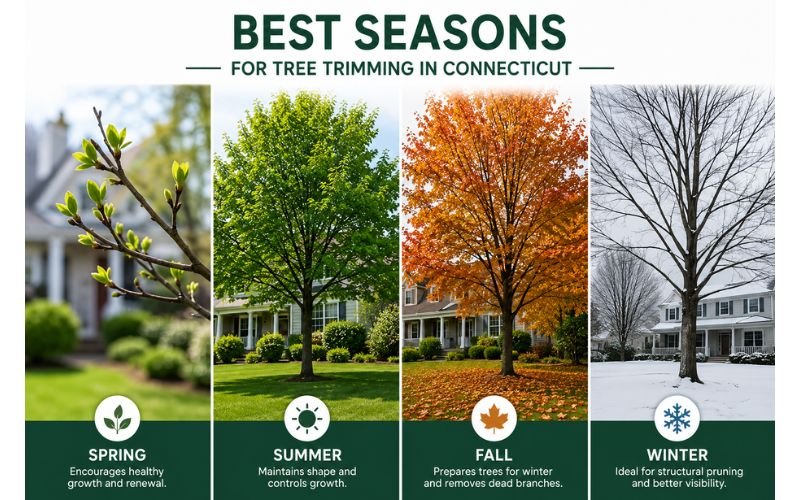
Best Seasons for Tree Trimming in Connecticut
1. Late Winter to Early Spring
The best time of the year to trim trees is late winter, and it is suitable for most of the trees in Connecticut. Trees are still dormant, so cuts cause minimal stress, and with no leaves in the way, branches are easy to see.
You should cut the dead wood and damaged limbs first. Then focus on the branches that are blocking anything. Make sure to use very sharp tools that do not harm the trees. Cut close to the branch collar for best results.
Do not trim the trees in freezing weather. Frozen woods will not get a clean cut, and it ruins the health of the tree. Another point to remember is not to cut more than a quarter of the branches in one visit. Your tree needs something left to work with.
2. Late Spring to Early Summer
This is the growth phase of the trees. Leaves start to grow, so you have to take care of them. It is a good time for small touch-ups but not for full-fledged trimming. It is a good time for a cleanup.
Pull off any suckers and the thin shoots shoot straight up from the branches. Take a look around to see if any broken limbs are lying in the garden. The tree is focused on growth, so you should not cut a lot, as it can slow that process down. Check the yard once and take notes of which trees need work.
3. Summer
Summer is not an ideal time for trimming because of intense heat and humidity. The trees have rapid growth, and they store fuel. Trimming can deprive the trees of those stores.
Homeowners should remove the dead or dangerous branches. Carefully handle any branch that is near the power lines or the roof. Dead or dangerous branches should be removed as soon as identified, regardless of the season. Avoid heavy pruning. Skip trimming on the hottest, driest days since the tree is already stretched thin.
4. Fall
People often prune in autumn, but this is not recommended. Trees push their nutrients to the roots to prepare for winter. Cuts in this stage will take more time to heal. That makes them easy targets for lawn disease.
Stick to dead or broken branches only. You have to clean the debris left after storms, but it’s better to neglect trimming in autumn. Use fall to plan rather than to cut. Make a list and wait for late winter.
5. Winter
Deep winter works almost as well as late winter for most trees. The ground is often frozen solid, so your lawn takes less damage from ladders and equipment.
Trim on the milder days. Take off weak limbs before ice or heavy snow can snap them on their own. Don’t trim during a deep freeze. Cold wood turns brittle and splits instead of cutting clean. This is a solid window for oaks and maples since bugs are inactive and won’t bother the fresh cuts.
Best Time to Trim by Tree Types
1. Oak Trees
The best window is from November to March. Oaks are susceptible to oak wilt caused by beetles, which are only active in warmer months. Cold months keep them away from your cuts. Clean tools between trees. If you must cut in summer, seal the wound.
2. Maple Trees
Aim for late fall or the middle of winter when you prune maple trees. Avoid pruning in early spring at all costs to prevent excessive sap loss. Maples lose massive amounts of sap if you cut them right before spring arrival. The bleeding ruins the look of your lawn, so it’s critical to wait for the dormant stage.
3. Fruit Trees (Apple and Cherry)
The best time is late winter before the buds grow. It shapes the tree up nicely and opens things up so air can move through, which keeps disease down. Take off dead wood and anything rubbing against another branch. Don’t touch these in the autumn months.
4. Evergreens (Pine and Fir)
Late winter or early spring is ideal, right before the tree pushes new growth. A little shaping in early summer is fine, too. One rule you really can’t break: don’t touch the leader, that’s the branch running straight up the top. Cutting it can harm the tree.
5. Flowering Trees (Dogwood and Magnolia)
Wait until the blooms drop in spring. Trim too soon, and you’re cutting off next year’s flowers along with the branch. Clear out dead wood and crossing limbs, but keep everything else small and light.
Signs Your Tree Needs Trimming Now
Trimming has a specific season, but it does not apply to all situations. If something is wrong, you can trim it at any time of the year. Some possible situations are branches touching the roofs and power lines. Look for cracked or hanging limbs after a storm.
Inspect for branches rubbing against power lines or leaves that are discolored or unusually thin. Any of these means it’s time to act, whatever month it is.
DIY vs Professional Tree Trimming in Connecticut
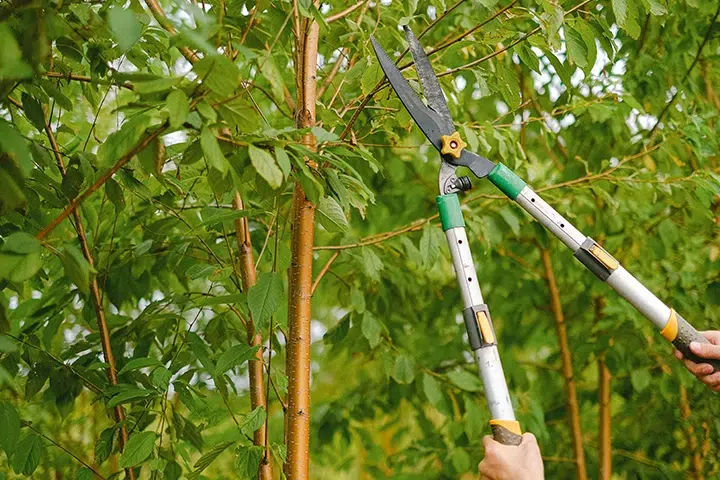
Small jobs are fine to handle yourself. Low branches and hand-tool work don’t take much skill.
You should call experts if the branches are near the power lines. Trust professionals if the branches are getting near the roof or the car. Cutting them yourself can be dangerous. Professionals have ladders and climbing gear to handle the job better.
Connecticut Tree Trimming Laws and Safety Tips
Connecticut requires permission from the utility company before you trim near power lines. Trees on public property generally require town approval before trimming. Call your local town office before any big job near a street or sidewalk.
Avoid trimming during a storm or intense winds. Be very careful when you are working near the power lines. Always wear safety gear such as gloves and eye protection.
Benefits of Regular Tree Trimming for CT Properties
Trimmed trees stay healthier and grow stronger. It increases the beauty and value of your property. It is important to cut overgrowth as it allows more light to reach the lawn below.
Regular care decreases the possibility of storm damage, too. People who stick to a tree pruning schedule spend less money overall since they avoid emergency removals later.
How TG’s Landscaping Can Help with Your Tree Care?
TG’s Landscaping works with CT trees and weather every day. We build a tree trimming and pruning schedule that fits your property and the season. Small shaping jobs or big storm cleanup, our crew handles it. You get healthier trees and a safer yard without figuring it all out yourself.
Conclusion
Knowing when you can prune trees changes everything for your yard. Late winter is the best time to trim trees in CT because of the ideal conditions. Some of the trees have their specific timings, which we discussed above. Always remember that your safety is a priority, so leave the big jobs for the professionals. They know how to handle the tricky parts.
FAQs
What is the best month to trim trees in Connecticut?
February and March are the best months to trim trees as they are in the dormant phase.
Can I prune trees in the fall in CT?
Only light cleanup. Skip heavy pruning since cuts heal more slowly in the fall.
Is it okay to trim trees in winter in CT?
Yes. Winter works well for most trees, especially on milder days.
When should I trim oak trees in CT?
Between November and March, to avoid oak wilt disease.
What is the worst time of year to trim trees in CT?
Late summer into early fall carries the most risk.
Does trimming trees in summer hurt them in CT?
Heavy cuts can stress a tree in summer. Homeowners should stick to small and necessary trims only.
Should I hire a pro or trim my own trees in CT?
Low branches are fine on your own. Call a professional for anything near power lines or high up.