
A green yard makes your house look great. You might think you just need a bag of food from the store to make it happen. In Connecticut, things are a little different. You have to keep the local water clean while promoting healthy grass growth.
Let’s study how to fertilize your lawn without wasting money or breaking the law.
Check the CT Fertilizer Laws and Lawn Health
People often purchase any random fertilizer from the market, and it’s a mistake. Every lawn has different needs. If you add nutrients your soil already has, you just waste your cash. You can also hurt the tiny roots of your grass if you use too much.
You also need to think about the area around you. When people put down too much fertilizer, rain carries it away. This runoff goes into the Long Island Sound and local ponds. It causes bad algae to grow and hurts the fish. You can stop this by learning what your grass really wants.
Follow Connecticut’s Strict Fertilizer Laws
The state has clear rules to keep rivers and lakes safe. You cannot put phosphorus on a lawn that is already growing unless you have a soil test indicating a deficiency. Most soil in our state has plenty of phosphorus naturally.
The law also tells you exactly when to fertilize a lawn safely. You can only spread fertilizer from April 16 to November 15. The ground is compact in the winter. If you put fertilizer at this stage, the grass cannot absorb it, and it just washes away. Always follow these Connecticut fertilizer laws for lawns to avoid getting a ticket.
Test Your Soil First With UConn Soil Testing
You do not have to guess what your soil needs; a test will tell you precisely. The smartest move is to get a UConn soil test for lawn fertilizer help. You just dig up a little bit of soil from a few spots and send it to the lab.
The lab sends you a report that acts like a map for your yard. It mentions the nutrients your soil needs and its pH level.
- The test is very cheap.
- You stop buying things your lawn does not need.
- You get a custom plan for a perfect yard.
Understand How NPK Works for Cool-Season Grass
Most yards in our area grow “cool season grasses”, such as Fescue and Bluegrass. These plants prefer a cool environment, and they need 3 major things, which people often call NPK.
- N (Nitrogen) for green and tall grass.
- P (Phosphorus) for strong roots
- K (Potassium) for protection against bugs and heat.
Late Spring Fertilizing Around Memorial Day With WIN Nitrogen
The best time to fertilize a lawn in CT is late May. You have to wait until the big spring growth surge slows down. Memorial Day is a great time to do this. It gives the grass strength before the hot sun hits in the summer.
You should look for a bag with “WIN” on the label. This stands for Water Insoluble Nitrogen. It is a slow-release nitrogen lawn fertilizer that CT experts suggest because it feeds the grass slowly over many weeks. This keeps the color nice without making you mow every two days.
Stop Feeding Your Lawn in July and August
Summer is very hard on grass in New England. The heat and dry air make the plants want to sleep. You might see your lawn turn brown, and this is normal. The grass is just resting to stay alive.
You must not use fertilizer during these hot months, as it will only stress the plant and might even kill it. Fertilizer also feeds weeds like crabgrass that love the heat. You should just give your yard a deep watering and leave the fertilizer in the garage.
Fall Fertilizing Around Labor Day for Root Growth
The most important part of the lawn fertilizer schedule is the autumn months. The air starts to cool down, but the ground is warm. This is when your grass builds its fuel for next year. Plan to put down food around Labor Day.
You need fall fertilizer for lawn health. Use a fall fertilizer high in potassium to support root growth and development. This thickens the grass when the snow melts.
Late Fall Light Finish Before Winter
You can do one last very light feeding if your grass still looks a bit thin. It is ideal in late October or the very start of November. You must finish before the legal cutoff on November 15.
The top of the grass stops growing now, but the roots are still busy. A small amount of fertilizer helps the plants store energy. This makes sure your yard wakes up fast and looks great as soon as spring arrives.
Use Smart Spreader Practices and Follow the 20 Foot Buffer
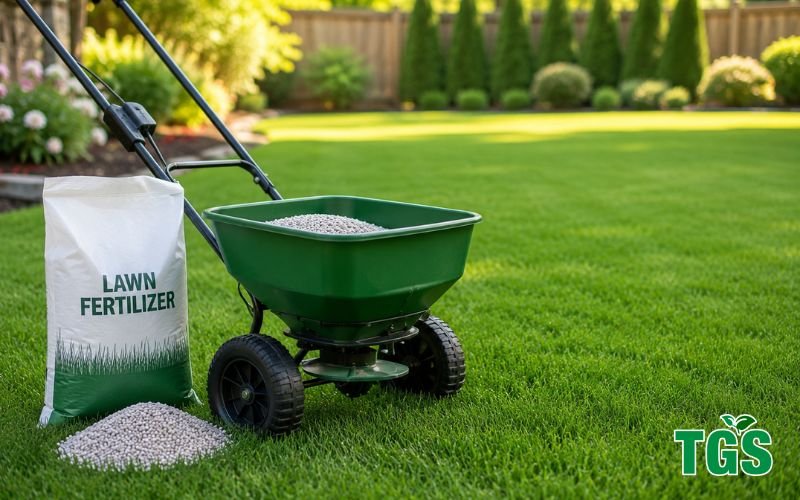
You need to spread the granules evenly so that you do not get dark green stripes. A push spreader is the best tool for this. You should always close the hole on the spreader before you stop walking. If you leave it open while standing still, it will burn a hole in your grass.
Grass Cycling to Cut Fertilizer Costs by One Third
You do not have to rake up your grass clippings, as it’s better to leave them on the lawn. This is called grass cycling that a lawn loves. It is the easiest way to feed your yard for free. You just need to keep your mower blades sharp.
The tiny clippings melt back into the soil very fast. They turn back into nitrogen that the grass can eat again.
- It cuts your fertilizer bill by about a third.
- You do not have to carry heavy bags of waste.
- It keeps the soil cool and moist during dry weeks.
Avoid Common Fertilizing Mistakes
Many people think more is better. They put down double the food, thinking it will be double green. This is a huge mistake, as too much food creates thatch, which is a thick mat of dead stuff that blocks water. It can also make your grass vulnerable to diseases.
You should also check the clouds. Never put down fertilizer if a giant storm is coming. The heavy rain will just wash your money into the gutter. Reach out to TGS Landscaping for professional landscaping in CT.
FAQs
When is the best time to fertilize my lawn?
Mark your calendar for late May and early September. These dates align with the natural growth cycle of our local grasses.
What is the Connecticut fertilizer law for lawns?
It is legally required to avoid applying phosphorus unless a soil test shows a deficiency, and you must observe the winter ‘blackout’ period ending April 16.
Can I fertilize my lawn in winter in Connecticut?
Absolutely not. It is ineffective for the grass and violates state environmental laws designed to keep our lakes clean.
Do I need a soil test before fertilizing my lawn in CT?
You really should get one, as it takes the guesswork out of shopping and shows you exactly what your dirt needs.
Why should I not fertilize my lawn in summer?
The summer heat forces grass into a sleep state, and feeding it then will just burn the lawn or feed ugly weeds.
What is the best fertilizer for fall in CT?
You should look for a winterizer bag that is low in nitrogen but high in potassium to feed the roots.
What is WIN nitrogen for lawn fertilizer?
It is just a slow-release food that breaks down over a few weeks, so your grass gets a steady diet.
How does grass cycling reduce fertilizer needs?
Recycling your clippings effectively provides a free “mini-feeding” every time you mow, cutting your fertilizer bill by about 30%.