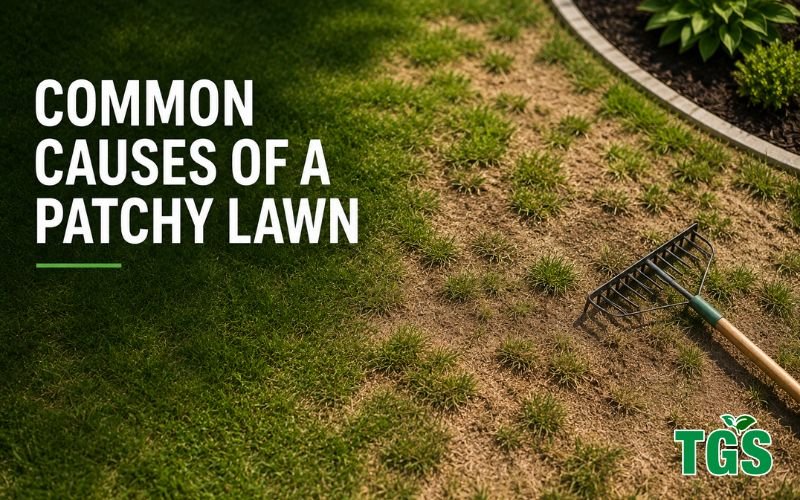
Sometimes you mow the lawn and water it. Maybe you even fertilize it and somehow you still walk outside and find brown spots and bare patches that were not there last month.
Every patchy lawn has a reason. Find it and you can fix it for good. Let’s take a look at the seven most common causes and their best solutions.
Don’t Just Add Seed, Find the Real Problem First
Most people see a bare spot, throw down seed and wait. Sometimes it works. Most of the time, the spot dies again in a few weeks. You have to become like a detective for a lawn. Look at the shape and size of the damage.
A dead circle in the middle of an open lawn is a completely different problem from a thin, struggling strip under your oak tree. Take five minutes to really look before you spend any money.
7 Common Causes of a Patchy Lawn in Connecticut
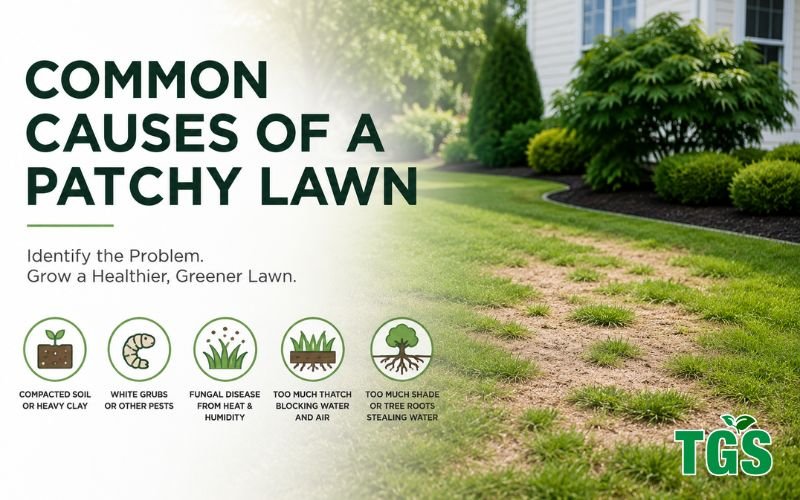
1. Compacted Soil or Heavy Clay (Common in Connecticut)
Connecticut soil is no joke. A lot of yards here sit on heavy clay that packs down tight over time. Foot traffic, rain and even just regular use make it harder every season.
Eventually, water cannot soak in and roots cannot push through. The grass thins out and dies and most people have no idea why. Push a screwdriver into the ground. If it feels hard, the lawn is compact.
How to fix it: Aerate. You can rent a core aerator or hire someone for this task. This machine removes small plugs of soil to allow the passage of air into the soil. You can also spread compost over the top.
2. White Grubs or Other Pests Under the Lawn
Grubs live just below the surface and eat grass roots. They ruin the lawn before you even notice their presence. The grass feels loose and spongy when you walk on it. You might also notice birds digging up your yard as they smell the grubs and prey on them.
How to fix it: Remove dead turf and count the grubs in one square foot of soil. Five or more means a real problem. Treat with a grub control product in late spring or early summer while grubs are small and close to the surface. Once they are gone, you can reseed patchy lawn areas and the seed will actually survive.
3. Fungal Disease from Summer Heat and Humidity
Connecticut has hot summers with high humidity at night, which encourages both. Brown patch makes big, ugly rings that appear almost overnight. Dollar spot leaves small, dead circles about the size of a silver dollar.
Red thread leaves pinkish threads on the blades that look like cotton candy. People assume these spots are just dry grass and keep watering at night. That actually makes everything worse.
How to fix it: You should water the lawn in the morning so the grass dries out during the day. Aerate and dethatch for better air circulation. You can also utilize a lawn fungicide if the problem doesn’t go away.
4. Too Much Thatch Blocking Water and Air
Thatch is the layer of dead grass and roots that builds up just above the soil. A thin layer is fine. But once it gets past half an inch, it acts like a mat. Water runs off the top. Fertilizer never reaches the soil. The roots dry out even when you think you are watering enough.
Cut a small chunk of turf and look at the cross-section. A thick, brownish, spongy layer between the green grass and the dark soil is a problem.
How to fix it: People often use a dethatching rake for small areas. It’s better to hire a professional team like TG’s Landscaping, as we solve the problem completely.
5. Too Much Shade or Tree Roots Stealing Water
Big trees look great, but they create two problems at once. The shade blocks sunlight and grass cannot survive without it. The tree roots spread out wide underground and steal water and nutrients from your grass. Do you notice patchy sod areas near the mature trees? You have already got the answer.
How to fix it: Use shade-tolerant grass types near the big trees. If the area gets almost no sun at all, stop fighting it. Put mulch around the base of the tree and move on. Some spots are just not meant for grass.
6. Dog Urine Burning the Grass
If you have a dog and dead spots in your lawn, there is a good chance they are connected. Dog urine is packed with nitrogen. Small amounts are actually fine for grass. But when your dog hits the same spot every single day, that nitrogen builds up fast and burns straight through the roots.
The giveaway is the ring. Dead brown center with a strip of dark, almost lush green grass growing right around the outside edge. That outer ring got just enough diluted urine to act like fertilizer. The center got the full concentrated hit and fire.
How to fix it: Hose the spot down right after your dog uses it. You are just diluting the nitrogen before it causes damage. For spots already dead, rake out the dead grass, scratch up the soil, lay down fresh seed and water it every day until new grass comes in. It grows back every time. You just have to stay on top of watering.
7. Mowing Too Low on Hills or Uneven Ground
Does your yard have bumps or high spots? When the mower blade passes over them, it shaves the grass. This is called scalping. Scalped areas lose most of their leaf blade, cannot feed themselves from sunlight and burn out fast in the heat.
Walk your yard and look at your worst bare spots. Are they sitting on a rise or a high point? Your mower is probably the cause.
How to fix it: Raise your mower deck. Cool-season grasses in Connecticut do best at three to four inches. Do not cut more than a third of the grass at once.
When You Should Call a Pro Instead of DIY?
Some lawn problems are just bigger than a weekend of work. And that is okay to admit. If grub damage is spreading across a large section of your yard or a fungal disease keeps coming back no matter what you try, or your soil feels like concrete in every direction, stop throwing money at products and call someone who actually knows what they are doing.
A good lawn care company in Connecticut will run a proper soil test, figure out exactly what is going on and use the right treatment at the right time of year. Most people who try to guess their way through a serious lawn problem end up spending way more money than if they had just picked up the phone from the start.
Simple Checklist to Fix Patchy Lawn
- Look at the pattern: Rings and circles mean fungus or grubs. Thinning near trees means shade or root competition.
- Test the soil: Rock hard means compaction. Spongy means thatch.
- Peel back dead turf: Check for grubs underneath.
- Think about your dog: A dark green ring around a dead spot is the giveaway.
- Check your high spots: Worst patches on the rise? Your mower is scalping them.
- Water in the morning: This allows water to dry in the afternoon sun.
Conclusion
Your patchy lawn is trying to tell you something is wrong. Find the real cause and the fix is usually pretty simple. We are TG’s Landscaping in Connecticut and we have seen every lawn problem you can think of. If your yard is giving you trouble and you want someone to actually come take a look, reach out to us.
FAQs
Why does my lawn have brown spots?
The most common causes are grubs, fungus, dog urine, or compacted soil. The pattern of the damage will indicate the specific problem.
What is the most common cause of bare patches in a lawn?
Bare patches are mostly because of soil compaction. It is quite common in CT because the clay soil presses when people walk.
Is my patchy lawn caused by grubs?
Peel back the dead turf. If it lifts like a loose rug and you spot five or more grubs per square foot, that is your culprit.
Can fungus cause patchy grass in the lawn?
Yes. Brown patch and dollar spot spread fast in hot, humid summers and people constantly mistake them for drought stress.
How to fix dead patches in the garden naturally?
Rake out the dead grass, loosen the soil, spread fresh seed and water daily until it fills back in.
What time of year is best to fix patchy lawn areas?
Early fall is ideal in Connecticut. Cooler temps and steady rainfall give new seed the best shot.
Does dog urine really cause dead patches in lawns?
Yes. Look for a dead-center spot with a dark green ring around the edge. That pattern is almost always a dog.