Is your lawn getting worse instead of better while remaining stuck on a fixed lawn mowing schedule?
The majority of homeowners go for a fixed mowing schedule and stick to it throughout the year. It’s like a ritual, whether it’s raining or sunny, the mower remains punctual to it. But what people don’t know is that sometimes a fixed schedule is the slow enemy of damaging the lawn.
Grass in Connecticut doesn’t grow the same way in August as it does in April. It witnesses fast growth in spring, slows in summer, picks back up in September, then stops almost completely before the first frost. That’s where a fixed lawn mowing schedule doesn’t care for any of this, and ultimately, your yard is the one that has to pay the price.
Now, the real question, which is asked by almost every homeowner, is: how often should I actually be mowing? To know this, you must read this piece by the end.
Mow by Grass Growth, Not the Calendar Date!
The best rule for successful mowing is to follow the one-third rule. You should never cut more than one-third of the grass blade in a single session.
It means you should mow according to the growth of the grass, not the week. Some weeks you’ll mow twice. Some weeks, especially in mid-summer drought, you might skip two weeks entirely.
If you cut too much at once, it will build up stress on the plant. This will remove the leaf surface, which is used by grass to do photosynthesis, and it exposes lower stem tissues that aren’t built to handle full sun. Recovery takes energy that the lawn could be using to grow roots instead.
Why Connecticut Lawns Mow Differently Through the Year?

Connecticut is situated in a transition zone, neither in the cool north nor in the warm south.
Although summers here are very hot and humid, winters are cool enough to make the turf dormant. These conditions in a single state show that no fixed mowing is going to work throughout the season.
Spring and early fall are the active growing windows. Temperatures are moderate, moisture is adequate, and grass in the cool season gets full advantage. These times are best to make your lawn grow well and get adjusted to frequent cutting.
Although the scenes are different in summer, heat stress, slower growth, and droughts make frequent mowing potentially harmful.
In winter, mowers are likely to stay in garages.
Connecticut’s Cool-Season Grass Types
Every other yard in Connecticut runs on cool-season turf. A bunch of common grass types in CT includes:
- Tall Fescue
- Perennial Ryegrass
- Fine Fescue
- Kentucky Bluegrass
All of these share a usual growth pattern. These bloom best in cooler temperatures between 60°F and 70°F. They push hard in spring and fall. They slow or stall in heat above 85 degrees. Knowing the pattern in depth is the foundation of a smart mowing schedule.
The Best Mowing Frequency by Season in Connecticut
- Spring (March through May): This is the best growth season. The majority of the yards ask for mowing every 5-7 days. For weeks, especially after rain and fertilizers, every 5 days is the right way. But you shouldn’t have to let the grass grow ahead of you in April, because it’s hard to catch up later.
- Summer (June through August): Growth gets slower down after the temperature rises. A gap of 10-14 days is enough.
- Fall (September through October): Growth gets better again in cooler temperatures. Growth returns to a 7–10 day mowing rhythm. This is also the time to be sure about your mowing height as you approach the season’s final cuts.
- Late Fall and Winter Season (November through March): Temperature can even drop below 50 degrees, and hence, the growth of grass is minimal in this season. Your final mow should happen before the first hard freeze.
Optimal Height for Mowing in Connecticut Lawns
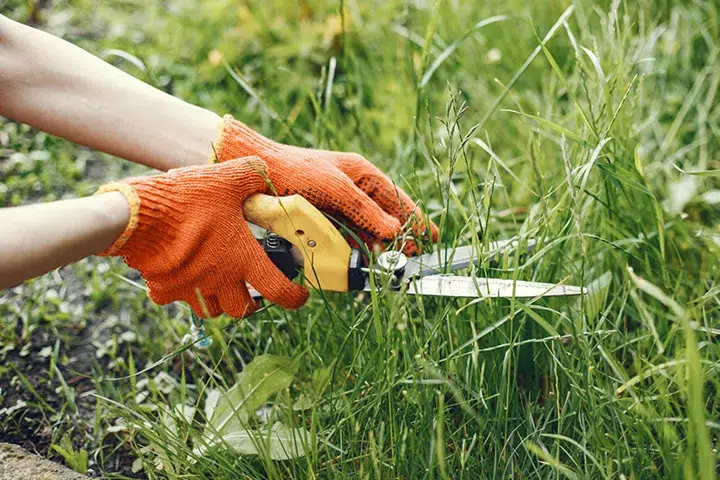
A mowing height of 3–4 inches is ideal during the growing season. Big trees shade the soil, hold the moisture in the long run, and build deep roots. On the contrary, shorter grass looks neat but can get dry quickly and welcomes more weed pressure.
In the summer, you should slightly uplift your deck, 3.5 to 4 inches is best for a yard against heat stress. In winters, you need to bring down the height up to 2.5 to 3 inches for the final cut.
Lawn Care in Coastal vs. Inland Connecticut
Coastal towns like Westport, Darien, Greenwich, all of these tend to have milder summer temperatures and more moderate humidity off Long Island Sound.
Inland areas, towns like Shelton, Easton, Newtown sees more temperature extremes.
Hotter, drier summers push cool-season grass into stress earlier. Homeowners in these areas often need to extend their mowing intervals sooner in June and hold off longer before fall mowing picks back up.
Smart Mowing Habits to Adopt for Healthy Lawn in Connecticut
- Pick the Right Mowing Time: Wet blades get clamped, can clog the deck, and get uneven cuts. Make sure all the morning dew is off the lawn before you mow. Hence, you can mow anytime between late mornings and noon.
- Alternate Mowing Direction: Using the mower in the same direction every time makes the soil more compact in patterns and causes the grass to lean. Change the route to keep the lawn upright and the soil structure intact.
- Sharpen the Blades: Dull blades damage the grass, making it impossible to cut it properly. Therefore, always sharpen cutting blades at least two times each season.
- Leave the Clippings: Unless the grass is very much overgrown, mulch the clippings back into the lawn. They break down quickly and return nitrogen to the soil. It’s a free light feeding every single time you mow.
Common Mowing Mistakes to Avoid in Connecticut

Scalping in spring is the most common mistake. People get eager after a long winter and cut the lawn short on the first mow of the year. It sets the lawn back by weeks.
Mowing dormant grass in summer drought is another. If the grass isn’t growing, cutting it just adds stress. A brown lawn that’s dormant is not a lawn that needs mowing.
Ignoring the final fall mow is a real problem too. Leaving grass too tall over winter traps moisture and sets up conditions for lawn disease and matting. That last cut matters. TG’s Landscaping is here to offer top-grade seasonal lawn care services to keep your yard fresh and healthy. Contact us right away, and we’ll be in touch with you soon.
Mowing Tips for a Healthier Lawn!
You have to match the mowing frequency as compared to the growth. Always sharpen your blades regularly. Let the clippings stay. And don’t mow a lawn that doesn’t need it.
A good lawn mowing schedule in Connecticut means more flexibility than most people expect, and a lot less unnecessary work.
Conclusion
There’s no single number that works for every Connecticut lawn every week of the year. The right answer is always tied to what the grass is actually doing. Follow the growth, respect the one-third rule, adjust your height by season, and your lawn will reflect it.
FAQs
Is once a week good for mowing or yards?
Yes, in spring and early fall, it works. But sometimes you may have to do it every 5 days. In summer, a 10-14-day gap is justified for slow growth rates.
Is mowing right every 10 to 14 days in the summer?
Yes. In the heat and droughts, cool-season grass gets slower. Mowing every 10-14 days is often enough and puts less stress on the lawn than cutting more often.
How frequently should you mow in drought?
In drought, it is recommended to let dormant grass grow a bit. Mowing in that particular season can lead to stress in the turf and removal of moisture the plant is holding, and delay recovery.
What is the best final mowing height before winter?
Bring Connecticut lawns down to around 2.5 to 3 inches for the final cut of the season. Do it gradually across two or three mows rather than all at once.
What is a simple Connecticut Mowing Takeaway?
You need to observe the grass, not the calendar. Do mowing when it needs it, not because the week says so.
What is the easiest rule to apply for the whole year?
Always remember not to cut the grass more than one-third in a single session, no matter what the time of the year.
What’s the ideal mowing routine for healthy, low-stress turf?
It’s the following:
- Every 5–7 days in spring,
- Every 10–14 days in summer,
- Every 7–10 days in the fall, and nothing in winter.
Adjust based on actual growth, not habit.