Trimming yard trees keeps your property beautiful. It protects your home. Many people chop branches without a plan and this mistake hurts the tree. This guide shows you how to do the work safely. You will learn the right way to care for your yard.
What is Tree Trimming?
Tree trimming concerns the look and safety of your tree. You trim a tree to clean up wild branches. It makes the space look neat. Tree pruning focuses on the actual health of the plant. You prune away dead or sick limbs.
Benefits of Regular Tree Trimming for Health, Safety & Curb Appeal!
Trimming removes heavy branches and this helps during winter storms. It allows fresh air and sunlight to move through the leaves. This stops bad fungus from growing. Plus, neat trees boost your home value. They look great to everyone passing by.
Signs Your Tree Needs Trimming Right Now
You should look for these clear warning signs before tree trimming:
- Dead or dry branches that snap easily.
- Limbs rubbing against your roof or windows.
- Branches crossing each other.
How to Trim a Tree: Step-by-Step Method?
Tools required for Trimming Trees
You do not need a shed full of expensive gear for basic yard work. You just need a few reliable items.
- Hand pruners work best for thin twigs under 1 inch thick.
- Loppers have long handles to cut branches up to 2 inches thick.
- A sharp pruning saw handles the heavy wood over 2 inches thick.
- Thick leather gloves protect your hands from scratches.
- Clear safety glasses keep flying wood chips out of your eyes.
Safety Precautions for Trimming
- Look up before you start to check for hidden wires.
- Leave branches near power lines to the utility crews.
- Keep both feet flat on the ground whenever possible.
- Never climb a shaky ladder with a running chainsaw.
- Let a professional team handle high canopy work.
How to Trim Fruit Trees?
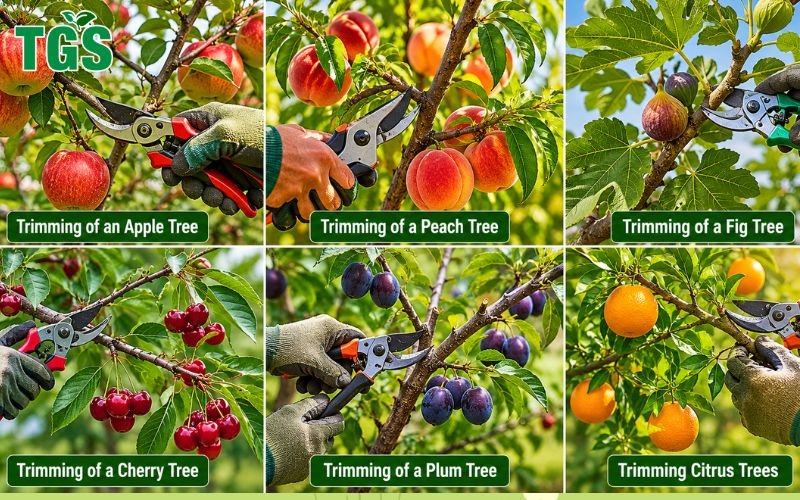
Trimming of a Apple Tree:
Most people use the central leader method. This leaves one main trunk in the middle. Side branches grow out like a Christmas tree. You should cut the upright shoots.
Trimming of a Peach Tree:
Cut the middle branches so sunlight can reach the center. This supports the growth of sweet peaches.
Trimming of a Fig Tree:
Fig trees bear fruit on older wood. You should remove only one-third of the branches each year. Focus on the lowest limbs touching the dirt. This keeps the bush clean.
Trimming of a Cherry Tree:
Cut the top limbs of sweet cherry trees to keep them short. Sour cherries grow like bushes. Thin out their crowded center branches for air circulation.
Trimming of a Plum Tree:
Plum trees grow very fast and wild. Cut them back in late winter. This will give an open-center bowl shape.
Trimming Trim Citrus Trees:
You have to remove frost-damaged wood. Cut the sprouts growing at the bottom part of the trunk.
Trim of an Olive Tree:
Olive trees need light inside thinning every two years. This allows sunlight to ripen the fruit. It prevents ugly fungal spots on the silver leaves.
Trimming of an Avocado Tree:
Avocado trees have sensitive bark. It burns easily in the hot sun. Always trim the tips of the branches to maintain their beauty.
Trimming of an Apricot Tree:
Apricot trees produce fruit on spurs. Keep these spurs safe. Only cut out old wood that no longer grows green leaves.
Trimming of a Mango Tree:
Trim mango trees after harvesting them in summer. Cut the top height down to a manageable level. Then you can reach the fruit easily next season.
How to Trim Ornamental, Flowering & Shade Trees?
Trimming a Palm Tree: (Fronds and Dead Growth)
Cut the brown fronds from your palm tree. Yellow fronds are still useful because the tree pulls nutrients from them. Do not cut branches past a horizontal line.
Trimming a Crepe Myrtle Tree:
Do not cut the tops, as it leaves ugly stumps. People call this crêpe murder. Instead, only cut small twigs from the inside. This shows off the smooth, beautiful trunks.
Trimming a Japanese Maple Tree:
These trees have a natural layer look. Use small hand pruners to thin out tiny crossing twigs inside the canopy. This allows you to see right through the delicate branches.
Trimming a Maple Tree:
Trim maples in mid-summer, as winter cuts cause a big problem. The sticky sap will drip all over your yard for weeks.
Trimming a Weeping Cherry Tree:
Trim the tips of their branches. They should sit at least 6 inches off the grass. This keeps bugs from crawling up.
Trimming a Holly Tree:
Hollies are tough and take shape well. Trim them with hand pruners in late winter. This keeps them tight, square, or round.
Trimming a Magnolia Tree:
Cut away broken limbs right after the spring flowers fall. This prevents ruining next year’s buds.
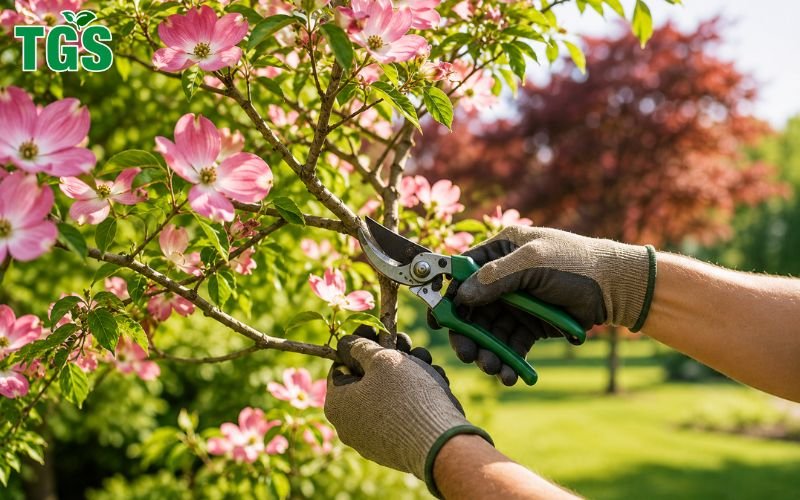
Trimming a Dogwood Tree:
Dogwoods stay small naturally. You just need to remove dead lower branches. This creates a clean trunk line.
Trimming a Lilac Tree:
Trim after spring blooming. Cut away the dead flower heads. This way, the plant uses its energy for new roots.
Trimming a Pine Tree:
You can only trim them by pinching back the soft new green tips. People call these candles. Do this work in the spring.
Trimming Evergreen Trees:
Keep your cuts inside the green needle zone. Cutting back into the bare, brown inner wood is a mistake. New needles will never grow back there.
Trimming an Oak Tree:
Only trim oaks during the coldest winter months. Fresh cuts in spring attract beetles. These bugs carry oak wilt that can kill oaks.
Trimming a Hydrangea Tree:
Hydrangea trees should be trimmed in late winter. Cut the branches back by one-third.
How to Trim Indoor & Tropical Trees?
Trimming a Money Tree:
If it is getting too tall, cut the stem just above a leaf node. Angle the cut slightly. That is it. New growth will show up below the cut in a few weeks.
Trimming a Bonsai Tree:
Just pinch new leaves off with your fingers before they open up. Do it regularly and the shape stays. Ignore it for a month and you are starting over.
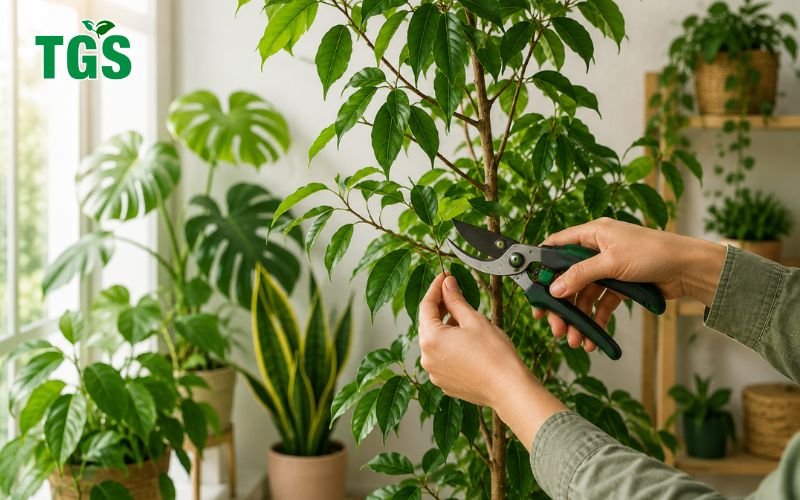
Trimming a Ficus Tree:
Gloves on before you touch it. The sap is messy and it stains. Trim whatever is crowding the inside so some light gets in there.
Trimming a Rubber Tree Plant:
Cutting the top just makes it taller. Cut the main stem if you want it to bush out. Sap comes out right away, so have something to wipe it with.
Trimming a Banana Tree:
Once a stalk gives you bananas, it is done. Cut it down to the ground, all the way. There is already a new shoot coming up from the roots. That one takes over.
How to Trim Back Overgrown Tree Branches Correctly?
- Find the branch collar wrinkle at the base of the limb.
- Position your blade just outside this swollen ring of bark.
- Angle your tool slightly away from the main trunk.
- Make a clean cut without leaving a long, dead stub.
- Avoid cutting flush against the main trunk wall.
The 3-Cut Method for Large Limbs (Avoid Bark Tearing)
Heavy branches are tricky. Dropping a big limb with one single cut from the top down will rip the bark right down the side of your trunk. You can stop this serious damage by using three separate cuts.
- Under-Cut.
- Top-Cut.
- Final Cut.
How Much to Trim a Tree?
- You should not cut more than one-third of any branch.
- Trees need leaves to feed themselves throughout the year.
- Stripping away too much green canopy shocks the root system.
- Over-cutting leaves your tree weak and hungry.
Trimming Time Explained your Trees Type!
The absolute best time to trim most trees is late winter. You can also do this in early spring. The tree is dormant during these months. Trimming while the tree sleeps prevents sap from bleeding.
When to Trim Apple Trees?
You must trim your apple trees every single year. Do this work in late winter. Your work should end before the green buds become visible.
When to Trim Fruit Trees? (Peach, Fig, Cherry, Pear, Plum)
Most fruit trees prefer winter trimming. Peach and plum trees need heavy winter cuts. This keeps their fruit low enough for people to pick. You should trim fig trees in late fall.
When to Trim Ornamental Trees?
The timing for these yard trees depends on flower growth. You should trim spring-blooming trees right after the flowers fade. You should trim summer-blooming trees in late winter.
Here is a quick reference table for common yard trees:
| Tree Type | Best Trimming Season |
| Crepe Myrtle | Late Winter |
| Maple & Japanese Maple | Mid-Summer |
| Oak | Late Winter Only |
| Pine & Evergreen | Late Spring |
| Dogwood & Magnolia | Late Spring |
| Holly | Late Winter |
Common Trimming Mistakes That Harm Your Tree
- Tree topping hacks off the main vertical trunk and spawns weak sprouts.
- Flush cuts slice into the main trunk bark and create deep rot holes.
- Over-thinning strips away the shade your tree needs on its own limbs.
The Costs of Tree Trimming!
The price to hire a crew depends on tree size. Here is what people can expect to pay on average:
| Tree Size | Height Range | Average Price Range |
| Small Tree | Under 30 feet | $150 to $450 |
| Medium Tree | 30 to 60 feet | $450 to $850 |
| Large Tree | Over 60 feet | $850 to $1,800+ |
Factors That Affect Tree Trimming Prices!
Prices change based on your yard. High trees cost more money. A tree might sit close to power lines or your roof. Then the crew must work slowly and use ropes. This raises the price.
DIY vs. Hiring a Pro Tree Trimmer?
You can handle small fruit trees and bushes yourself. You should hire a professional team for large trees. Ladders and chainsaws are dangerous. One mistake with a heavy branch can cause thousands of dollars in home damage.
How to Get an Accurate Tree Trimming Estimate?
Ask your contractor for liability insurance. You also need to check for workers’ compensation. Avoid any company that suggests topping your trees. Do not hire people who use climbing spikes on healthy trunks.
Conclusion:
You might have large trees or want an expert hand. TG’s Landscaping is here to help you. We provide professional tree trimming services right here in Connecticut. We keep your yard safe and beautiful all year long. Give us a call today to schedule your seasonal cleanup services.
FAQs
Can you trim a tree in the summer?
Yes, you can cut away dead wood or stray twigs in July or August. Just keep it light because summer heat stresses trees.
How much can you trim a tree without damage?
Follow the one-third rule. You should not cut more than 30% of the green leaves.
How often should trees be trimmed?
Most big yard trees need a good thinning every 3 to 5 years. Young fruit trees need a quick cleanup every single winter.
Do you need a permit to trim trees in your home?
It’s not mandatory for regular backyard maintenance. Some towns protect big trees, so check the rules of your town.
What if you don’t trim your trees?
Your yard gets dark because dense branches block out the sun. Heavy limbs will rub together, rot and snap during bad storms.
Is it safe to trim trees yourself?
Shaping bushes and clearing low twigs from the grass is totally fine. Call a professional crew the second your feet leave the ground.