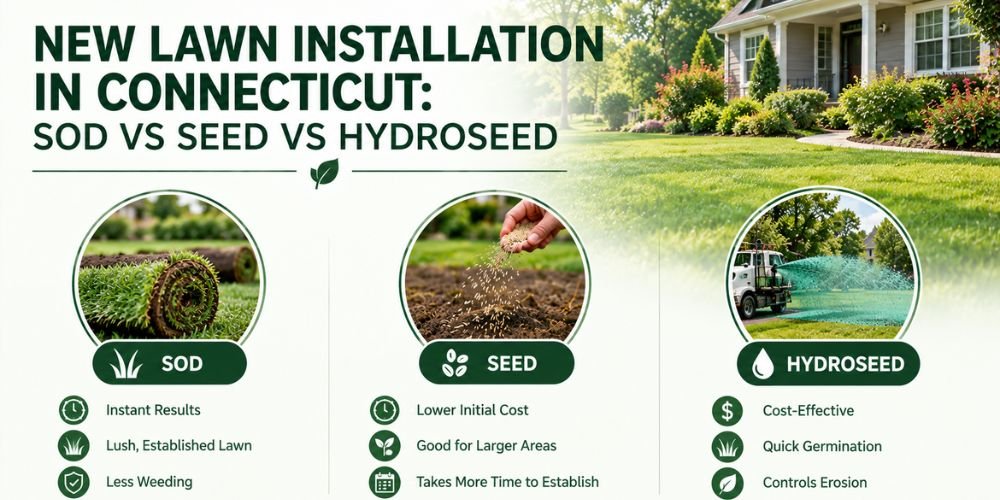
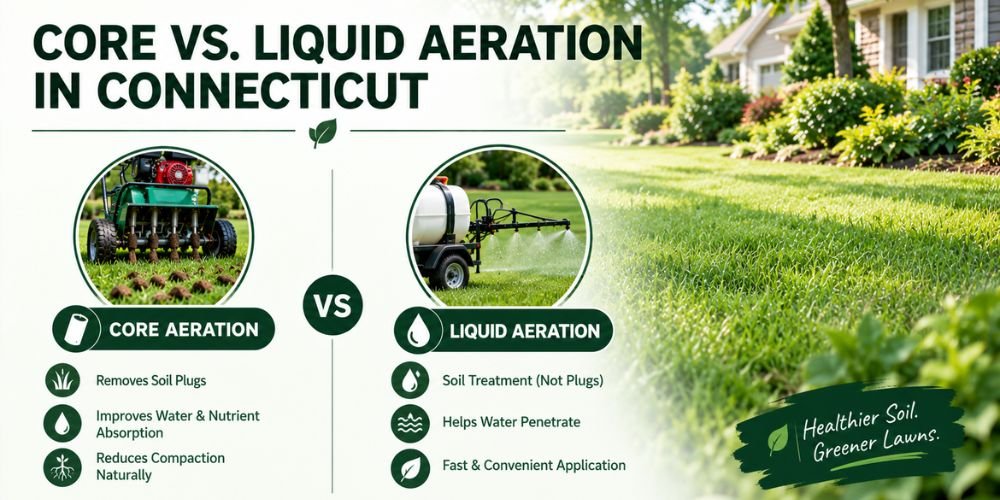
Heavy foot traffic can compact soil, restricting water, air, and root growth. Core aeration removes small soil plugs to relieve compaction. Liquid soil treatments may improve water penetration but do not replace core aeration for compacted soil.
Core vs. Liquid Aeration: What Is the Difference?
Core aeration removes small plugs from the soil surface. The small holes create more space for air and water near the grass roots. The plugs later break down and return organic matter to the soil.
Liquid aeration does not pull soil plugs from the lawn. Instead, a liquid treatment works within the soil to support water movement. Results depend on the product and soil condition. People may use this method during routine lawn care.
Point | Core aeration | Liquid aeration |
Main action | Removes soil plugs | Uses a soil treatment |
Soil compaction | Helps with surface compaction | May help with mild compaction |
Root zone access | Creates open soil channels | Helps soil receive water |
Best use | Dense or compact soil | Mild soil stress |
Visible result | Small soil plugs | No soil plugs |
Need for equipment | Requires an aerator | Uses a liquid product |
Can Liquid Aeration Replace Core Aeration?
Liquid aeration cannot replace core aeration when soil has serious compaction. Core aeration removes soil plugs and creates open space in the soil. Liquid products work through soil treatment instead. People with mild compaction may use liquid aeration as part of lawn care. Hard soil may need core aeration first.
Does Your Lawn Need Core Aeration?
Use this quick checklist.
- Soil feels hard under a hand trowel.
- Water sits on the lawn after rain.
- Grass has thin spots after regular foot use.
- Roots stay near the soil surface.
- A screwdriver meets strong resistance.
Choose core aeration when several signs point to compacted soil. Ask for a soil check when the lawn shows other problems too. If you see thin or bare areas, first check what may cause your patchy lawn. A patchy lawn can have more than one cause.
Best Time to Aerate a Lawn in Connecticut
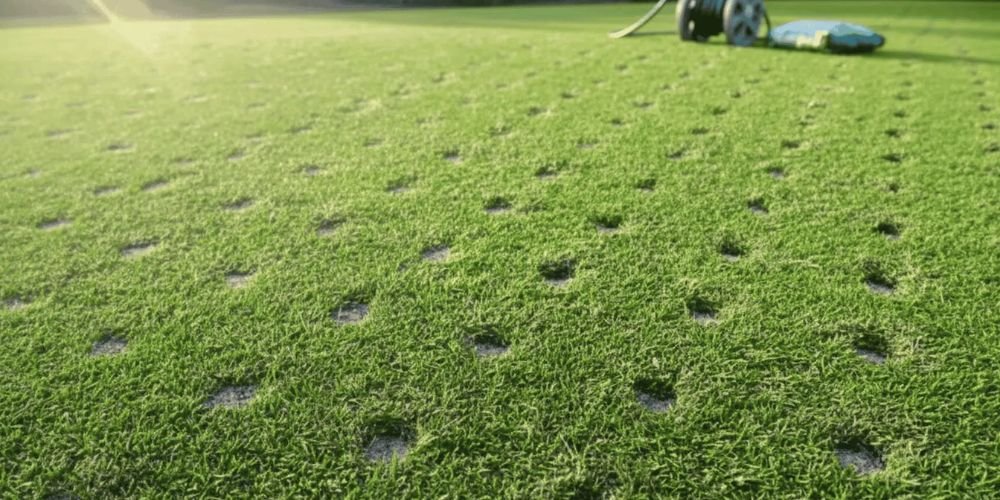
Cool-season grass grows well during the cooler parts of the year. Core aeration works best when soil has enough moisture for the machine to pull clean plugs. Avoid working when soil feels wet and sticky.
Season | General schedule | Lawn condition |
Early spring | Use with care | Soil may stay too wet |
Late spring | Limited use | Grass faces summer stress |
Early fall | Best choice | Grass can recover well |
Late fall | Use with care | Growth slows before winter |
For many lawns, early fall offers a useful window. People should check soil moisture first. A local lawn professional can help choose a suitable date for your grass type.
Why Core Aeration and New Seed Work Well Together?
Core aeration creates open spots in compact soil. New grass seed can reach these spaces and contact soil more easily. This can help a thin lawn fill in when seed, water, and care match the lawn’s needs.
Use the best time to plant grass seed in Connecticut guide before you choose a seed date. People should match seed work with the local season and grass type.
Core Aeration vs. Thatch Removal vs. Spike Aeration
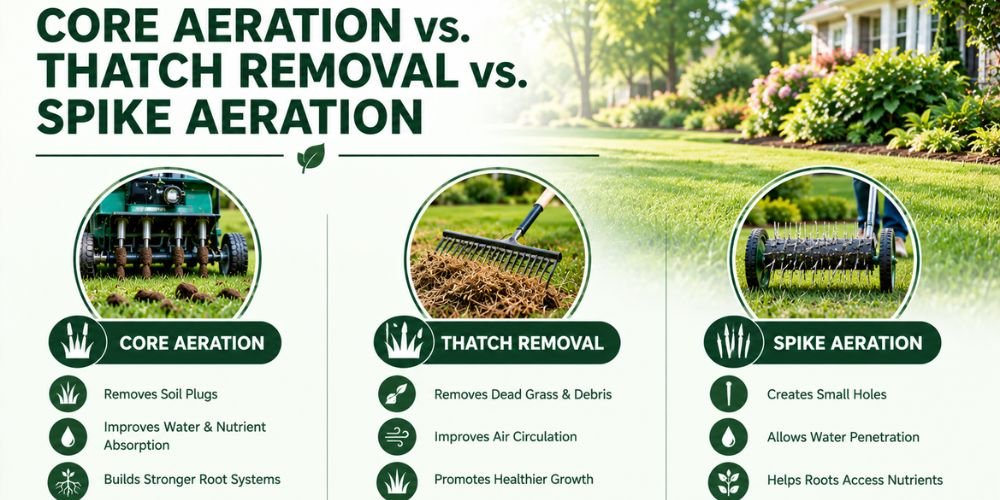
These lawn care methods solve different soil or turf problems. Core aeration removes soil plugs. Thatch removal clears a thick layer of dead grass material near the soil surface. Spike aeration makes holes without removing soil plugs.
Method | Main purpose | Best fit |
Core aeration | Opens compact soil | Hard soil |
Thatch removal | Removes thick thatch | Heavy thatch layer |
Spike aeration | Makes small holes | Light surface stress |
Liquid treatment and core aeration also differ in how they affect soil. Core aeration gives a physical opening in the soil. Liquid treatment uses a product to support soil movement.
Do not pick a method based on lawn appearance alone. People should first look at soil hardness and the cause of poor grass growth.
How to Prepare for Core Aeration and What to Do Afterward?
Before core aeration, mark irrigation heads and other lawn features. Water the lawn enough to soften dry soil. Do not saturate the area.
After core aeration, leave the soil plugs on the lawn. Water as your grass type needs. Follow the seed plan if you also add new seed.
Before
- Mark irrigation heads.
- Mark an invisible fence.
- Check soil moisture.
After
- Leave soil plugs in place.
- Keep new seed moist.
- Limit heavy foot use.
People should also follow any care advice from the lawn professional. Good aftercare helps the lawn use the new soil space.
When Core Aeration Will Not Fix the Problem?
- Core aeration cannot solve every lawn problem. Poor slope can send water toward low areas. Persistent drainage failures need a drainage plan. Downspout or runoff problems need a water path away from the lawn.
- Deep or subsoil compaction may sit below the reach of normal core aeration. Severe shade can limit grass growth. Tree-root competition can also affect lawn health.
- Pest or disease damage needs a proper cause check. Incorrect grass selection can lead to weak growth. Soil fertility or pH problems need soil care based on test results.
How Often Should You Aerate a Connecticut Lawn?
Many Connecticut lawns may need core aeration once each year when soil compaction returns often. Some lawns may need less frequent service. Your soil type and lawn use should guide the schedule.
People should check the lawn before each service. Hard soil and poor water movement can signal a need for another pass.
DIY or Professional Core Aeration: When Is Help Worthwhile?
DIY core aeration can work for a small lawn with easy access. The machine still needs correct setup and safe use. A professional can handle larger lawns with less effort from you.
Use this checklist:
- Choose DIY if the lawn has easy access.
- Choose DIY if soil has mild compaction.
- Choose professional help if the lawn covers a large area.
- Choose professional help if soil stays hard after rain.
- Choose professional help if you need seed work too.
You should also check for irrigation lines before machine use. An invisible fence needs clear marking. Ask for professional lawn aeration and maintenance when you want one plan for soil and turf care.
Core and Liquid Aeration Services from TG’s Landscaping
TG’s Landscaping can help people choose between core and liquid aeration based on lawn needs. A lawn check can help identify soil stress before service. You can also pair aeration with other lawn care work when the site needs more support. See TG’s lawn aeration services for service details.
Conclusion
TG’s Landscaping can help people choose between core and liquid aeration based on lawn needs. A lawn check can help identify soil stress before service. You can also pair aeration with other lawn care work when the site needs more support. See TG’s lawn aeration services for service details.
FAQs
- Can liquid aeration replace core aeration?
Liquid aeration does not fully replace core aeration for serious compaction. Core aeration removes soil plugs and creates open soil space. Liquid products use a different method. People with mild soil stress may use liquid treatment as part of regular lawn care. - Is liquid aeration suitable for compacted soil?
The results vary by product and soil type. Core aeration gives a direct physical opening in compacted soil. People should assess soil hardness before they choose a treatment. - What are the signs that my lawn needs core aeration?
Check for hard soil and poor water movement. A screwdriver can help you check soil resistance. Thin grass after heavy foot traffic can also point to compaction. People should look at the soil before they choose core aeration. - When is the best time to aerate a lawn?
Early fall often works well for cool-season grass in Connecticut. Soil should have enough moisture for clean plugs. Avoid working when soil feels wet and sticky. People should also check local weather before service. - Can I aerate my Connecticut lawn in spring?
Yes, but spring may not suit every lawn. Wet soil can cause problems during machine use. - Should I overseed after core aeration?
Yes. Core aeration creates room for new seed, and it can grow better with moisture and soil contact. - Is spike aeration the same as core aeration?
No. Spike aeration makes holes without removing soil plugs. Core aeration removes plugs from the soil. - Can core aeration solve the pooling problem?
Core aeration may help when compact surface soil limits water movement. Core aeration cannot fix poor slope or a drainage failure. People should check the water source before they choose aeration. - Should I remove the soil plugs after aeration?
No. Leave the soil plugs on the lawn. They will break them down over time and return nutrients to the soil. - How often should I aerate my lawn?
Many Connecticut lawns may need core aeration once each year. Some lawns may need service less often. People should check soil hardness and lawn use before each service. - Can I aerate around irrigation lines or an invisible fence?
Yes, but mark all known lines before machine use. An invisible fence needs clear markers so the service area stays safe. People should tell the lawn professional about hidden lines before service. - Does core aeration suit a small Connecticut lawn?
Core aeration is a good option for small lawns when compact soil limits root growth. People should check soil hardness before they rent equipment or book service.