If you live in a wooded neighborhood like Nichols or Tashua, you know the struggle: you buy a bag of “Sun & Shade” mix from the hardware store, spread it in the spring, and by July, it’s dead. It’s frustrating to watch your money wither away under the canopy of Trumbull’s beautiful, mature oaks and maples. The problem isn’t your watering or your effort. It is hidden in the genetics of the grass. Most standard mixes rely on Kentucky Bluegrass, which demands full sun. You must follow a good strategy to get a lush green carpet in the shade. At TG’s Landscaping, we specialize in shade-tolerant solutions that actually last.
The Shade Problem: Why Your Grass Keeps Dying
People love life in Connecticut. There are numerous old trees lining the streets. The yards feel private and cool in summer. The neighborhoods look green and serene, but for lawns, these same trees can bring problems.
People try the same efforts each year. They buy a Sun and Shade grass mix. They use it in the spring and water it frequently. The lawns look better at first, but the grass either burns or gets thin during summers. This repeats every year, and people complain about the soil or the weather. The actual issue is neglected. The grass is not suitable for your climatic conditions.
Most of the store-bought mixes use Kentucky Bluegrass. This grass needs intense sunlight to grow. Shade gradually strains it to death. You need a good species of grass for a healthy lawn in Trumbull.
The “Green Canopy” Effect in Neighborhoods like Nichols
The place has tall oaks and maples. They shade out the sun throughout the day. In areas like Nichols, Daniels Farm, and Tashua, many lawns do not get direct sunlight. In some parts, light filters only through the leaves. Others stay shaded all day.
Grass struggles in these conditions. Trees get the water and nutrients first before the grass and roots have a chance. Fallen leaves can change the soil conditions. Shade decreases the soil temperature, and it becomes moist because water evaporates at a slow rate. This causes stress for the grass.
Why Photosynthesis Fails with Standard Grass Types
Grass needs sunlight to produce energy, and this process is called photosynthesis. It is crucial for the growth and strength of the plants. Grass cannot produce food for itself if it doesn’t get sufficient sunlight.
Kentucky Bluegrass grows in wide areas with direct sunlight. It is starved in shady conditions. The grass grows higher to catch sunlight. This makes the stems weak. Heat and drought kill it off. Keep in mind that more watering does not solve this problem. Fertilizer does not help either. The grass cannot grow in this environment.
Kentucky Bluegrass vs. Tall Fescue: The Showdown
Kentucky Bluegrass: The Sun-Lover (Great for Open Fields)
Bluegrass develops the most beautiful and high-quality yard in full sun. People choose this because it has a beautiful color and texture. It is spread by underground stems, so it can grow quickly. The grass works best in open yards with a high amount of sunlight.
It demands four to six hours of direct sunlight every day. You need to water it during the summer season. Kentucky Bluegrass doesn’t grow in yards with shade. It becomes thin and pale. You will notice many bare spots. Overseeding it again means just doing the same thing over and over, so you must avoid that.
Tall Fescue: The Shade-Warrior (Best for Trumbull Backyards)
Tall Fescue does much better in shade than Bluegrass. This is a better choice than the generic coarse grass types. It develops dark green leaf blades that feel soft to walk on. This grass develops deep roots that can locate water deep in the soil.
Tall Fescue is adapted to shade and needs only 3-4 hours of direct sunlight. It keeps its color in shade and endures summer stress. This is a good alternative to Bluegrass. Tall fescue lasts for years if planted correctly.
Local Regulation Alert: The ‘Shade Test’
Before we seed a single square foot, we perform the ‘Shade Test.’ If any part of your lawn gets less than 4 hours of direct sunlight, Kentucky Bluegrass will die. It cannot survive in this environment, no matter how much you water it. We exclusively use Turf Type Tall Fescue (TTTF) blends in these spots. Modern TTTF is dark green and soft underfoot. It has deep roots that thrive under the heavy tree canopy where other grasses fail. We match the seed to your light conditions, not the other way around.
Why “Contractor’s Mix” Fails in Trumbull
The Hidden “Weed Seed” in Cheap Bags
Cheap grass seeds cannot solve the problems. Many “Contractor’s Mix” Bags are filled with filler seed and weeds. This information appears in small print on the label, which homeowners often ignore. As soon as weeds appear, they will take up the light, water, and nutrients. They spread quickly in the shade. The lawn becomes thin and patchy within months. Pulling weeds afterward costs even more time and money. You only need high-quality seeds to fix the problem.
Why Ryegrass is a Temporary Fix, Not a Solution
Ryegrass is a part of many mixes because it sprouts quickly. It creates a green color immediately and gives the illusion of success. This grass cannot tolerate shade for long periods. It often declines after one or two seasons, especially under the shade of trees. You will notice that bare spots come back, and it causes frustration. Ryegrass is only a short-term cover. It does not solve the problem in Trumbull lawns.
TG’s Overseeding Process for Shady Lawns
Core Aeration: Opening the Soil for Deep Roots
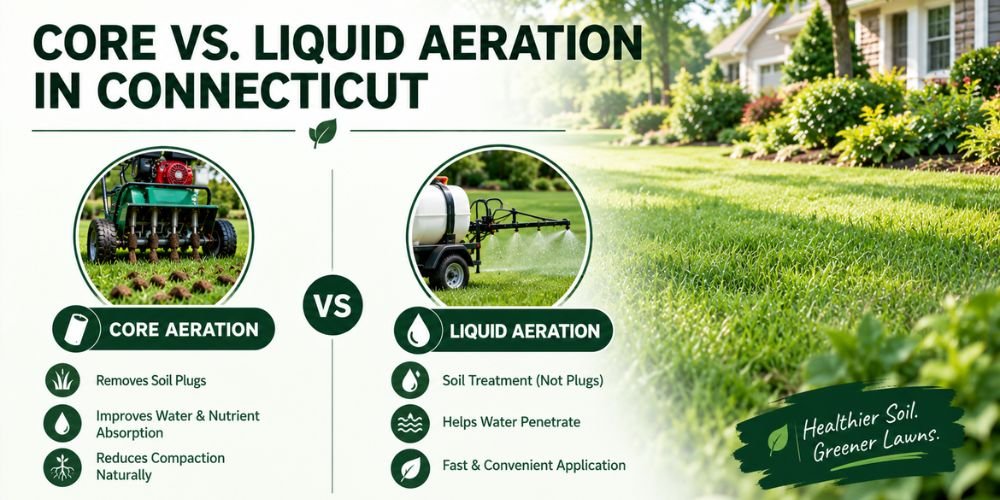
The ground beneath the trees compacts over time. Foot traffic and root growth press the particles together. This limits water and air movement. Core aeration solves these issues. TG’s Landscaping removes small plugs of soil across the lawn. This process makes channels for air and water movement.
Aeration is important for the growth of Tall Fescue roots. The roots grow deep and become strong. The turf becomes resilient to harsh conditions. Aeration forms the foundation for good lawn health.
Selecting the Right “Shade Blend” for Your Specific Yard
Shade varies from yard to yard. Some areas receive the warm morning sun. Others get filtered light throughout the day. This explains why tree type and spacing matter. We select the right Tall Fescue mix for your specific conditions. We avoid generic shade mixes. TG’s Landscaping team uses tested seed varieties suitable for your lawn. Our plan is modified based on your soil conditions. The lawn will fill evenly and remain beautiful in all seasons.
FAQs About Trumbull Shade Care
My yard in Daniels Farm is mossy. Will grass ever grow there?
Yes, grass can grow if you follow a good plan. Shade and damp conditions allow moss to grow. Call TG’s Landscaping to aerate the soil and improve the conditions. We adjust the watering schedule and seed mix so the grass can grow.
Can I trim my town trees to get more light on my lawn?
Trumbull has specific regulations for some types of trees on residential properties. Homeowners cannot trim without approval. Even trimmed trees cast a shade on the lawn. Grass selection is more important than the pruning of trees.
Does shady grass need less water than sunny grass?
Shade reduces evaporation, so shady lawns need less frequent watering. Deep watering works better than daily light watering. It supports the growth of roots.
Conclusion: Get a Green Lawn Under the Trees
Shade in your lawn does not mean that the lawn cannot be beautiful. You need a good plan and a suitable type of grass. Kentucky Bluegrass is not meant to grow under heavy tree cover. Tall Fescue works better in a shaded lawn. TG’s Landscaping has been working for years in Trumbull. Our expert team understands the local soil and climate conditions. We use proven methods to create a beautiful lawn. Stop wasting money on store-bought mixes that fail every year.